
Reports & Papers
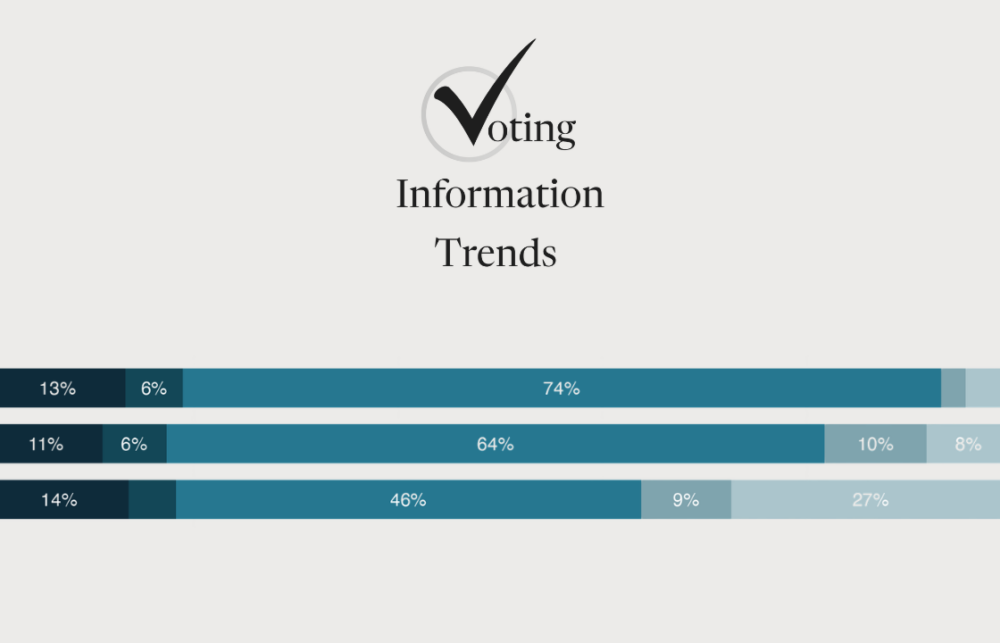
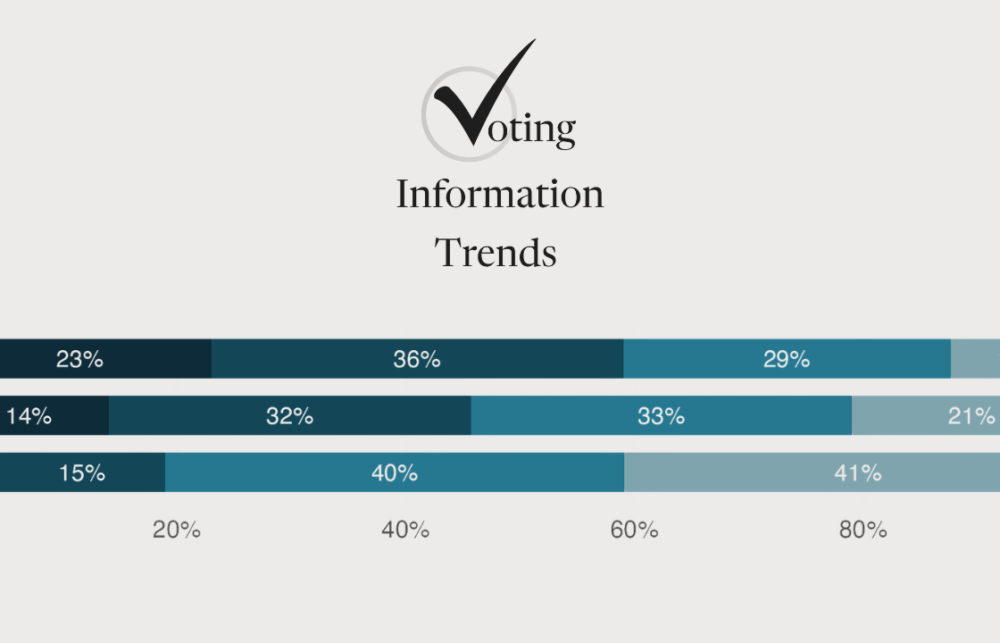
Most Voters in States Without Voter ID Requirements Wrongly Believe ID Is Required


Research Initiatives
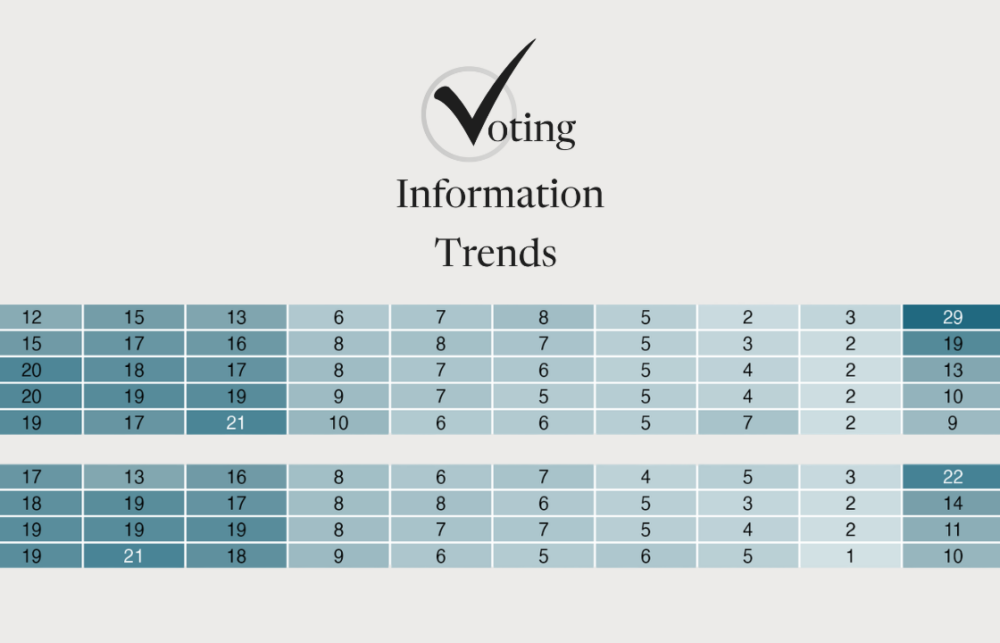
The Shorenstein Center’s 2026 Voting Information Trends project tracks how the U.S. population gets voting information and understand key topics about voting ahead of the 2026 U.S. elections — including voter registration, polling locations, and other voting mechanics.
Powered by the National Internet Observatory and the CHIP50 survey project, the research combines self-reported survey data with observed online behavior to produce quick-turn reports on the voting information landscape. Methodology for the series can be found by clicking here
Browse our latest reports, and explore the interactive data visualization showing where and how people are finding voting information in the 2026 elections.
Reports & Papers
Reports & Papers
Reports & Papers
Use the dashboard below to explore where people are finding information about voting in the 2026 midterm elections. Data for the dashboard comes from the National Internet Observatory.
The Research Team below includes members of the Shorenstein Center and Harvard Kennedy School faculty and staff, as well as collaborators at Northeastern University, Rutgers University, and the University of Rochester. This work is also done in collaboration with the teams at the Ash Center’s Democracy and the Informed Public program, the National Internet Observatory, and the Civic Health and Institutions Project.

Kalb Professor of Global Communication

Professor in the Khoury College of Computer Sciences at Northeastern University
Faculty Affiliate

Martin Anderson Brewer Professor of Political Science, University of Rochester
Research Collaborator
Senior Researcher

Lombard Director of the Shorenstein Center and Edward R. Murrow Professor of the Practice of Press, Politics and Public Policy at Harvard Kennedy School

University Distinguished Professor of Political Science and Computer Sciences, Northeastern University
Faculty Affiliate

Shorenstein Center Executive Director

Professor, School of Comunication and Information, Rutgers University
Faculty Affiliate

Senior Researcher, 2026 Voting Information Trends
Doctoral Student, Northeastern University

Senior Data Scientist

Senior Researcher, 2026 Voting Information Trends
Unless otherwise noted, all information contained in the Shorenstein Center’s 2026 Voting Information Trends reports, as well as the interactive dashboard, is free to share and republish, and is licensed under a Attribution-NoDerivatives 4.0 International (CC BY-ND 4.0) license.

For press inquiries contact Lindsay Underwood
For general inquiries about this research, contact Laura Manley