



Reports & Papers
Can They Do Good and Still Do Well? Local TV Stations and Communities’ Information Needs

Reports & Papers

The views expressed in this Discussion Paper are those of the faculty affiliate author(s) and do not necessarily reflect those of Northeastern University, the Harvard Kennedy School, the Shorenstein Center on Media, Politics and Public Policy, or Harvard University. This paper has not undergone formal review and approval. It is included in the Shorenstein Center Discussion Paper series to elicit feedback and encourage debate on important issues and challenges in media, politics and public policy. Copyright belongs to the author(s). Use is governed by the Harvard Kennedy School and Shorenstein Center Open Access Policies. A PDF of this paper is available for download here for personal use only.
This study seeks to understand what “local” means to a generation that no longer encounters news in a single place, but across a fragmented mix of television, apps, and social platforms. We conducted a survey of 1,012 persons aged 18 to 34 across the United States, examining how younger audiences engage with and make sense of local television news. What we found complicates the familiar narrative of decline. Young audiences have not abandoned local news. Instead, they move fluidly between platforms, expect news that feels visually alive and socially connected, and value journalism that reflects their communities in meaningful, contemporary ways. More than half of 18- to 34-year-olds still watch local newscasts weekly, 61% use local station apps, and 94% have at some point pursued additional information after encountering local news on social media. On top of that, local TV reporters and anchors remain among the most trusted community voices, far outpacing influencers and podcasters. Based on these insights, we offer a framework for how local newsrooms can adapt their storytelling, technology use, and audience relationships to stay relevant and trusted in a changing media landscape.
Young audiences in the United States are changing their relationship with news—a shift that has been well-documented.1 For local news, already facing a steep decline,2 this transformation carries urgent implications. At the same time, local TV news has shown resilience in the face of existing threats to the larger ecosystem.3 This is in part because of the persistent habits of older audiences, as well as sustained advertising commitments, cable retransmission fees, election spending, and other dynamics not found in other parts of the changing media landscape. For example, previous research published by the Shorenstein Center has shown that local television news has the potential to step into the information void left by the weakening of local newspapers.4 Nonetheless, the survival of local TV news will be heavily contingent on its ability to respond to the changing habits, expectations, and news values of younger audiences.
Of course, TV news stations have long known of the necessity of cultivating younger audiences. This report contends that new approaches must be considered to pursue this vital goal more effectively. Much of the existing focus has centered on driving younger audiences to consume local news content as it already exists, treating internet-based or OTT (over-the-top) content primarily as a promotional pipeline or extension of television broadcasts.5 Such a strategy overlooks the fact that these platforms operate as distinct media environments with their own norms, logics, and modes of engagement—environments where audiences have fundamentally redefined what counts as news.
Given this context, the Reinventing Local TV News (RLTVN) Project at Northeastern University seeks to bring a new perspective to the challenge of developing younger audiences. Our aim is to understand how local newsrooms can reach adults aged 18 to 34 years old in the United States. To do that, we had to develop an understanding of the attitudes and consumption habits of this demographic. We also want to be able to establish a clear diagnostic framework for how younger audiences perceive local television news, and to offer local stations actionable strategies for adapting to these evolving patterns of engagement and perception.
RLTVN has spent the last decade researching and testing ching and testing new storytelling approaches for local television news. In 2019, we published an action plan for newsrooms to help them evolve and grow their audience during the ongoing digital revolution. The second phase of this research project zeroed in on one of those potential solutions, the use of animation and other graphical tools in local TV news as a means of engaging younger audiences and helping them better understand news stories. The most recent phase of research built on prior findings and expanded experimentation. For one year, RLTVN embedded innovation fellows to serve as digital content creators in three top newsrooms in New York, Chicago, and Boston. They worked in collaboration with an animation fellow who served all three stations. The group produced stories specifically for the television stations’ digital platforms, including social media, websites, and streaming apps. The new position did not establish a single “winning formula” for digital platforms. However, we did see success, including a handful of viral videos, millions of views across YouTube and TikTok, and a regional Edward R. Murrow Award for Excellence in Innovation.
This current report builds on that work to argue that younger Americans are interested in news and that it is essential for newsrooms to adapt their delivery methods, both in platform and stylistically, to reach these consumers. We make the case for “reinventing” local TV news and fundamentally rethinking how we conceptualize “local” in a multi-platform media landscape. These shifts are often discussed in terms of audience growth and business sustainability, but they carry broader implications. While it is good business for journalists to work to expand their audiences to younger generations, it is also essential to fulfill the media’s role in a democracy.
In June 2025, Northeastern University partnered with SmithGeiger Group to conduct online interviews with 1,012 news consumers aged 18 to 34 across the United States. The study was fielded from June 3 to June 8, 2025, with a median survey length of approximately 30 minutes. Respondents were recruited through multiple high-quality, double opt-in panel providers. We also monitored demographic quotas (e.g., age, gender, region, race/ethnicity) to align with the intended study population. The final weighted sample included 50% men, 49% women, and 1% nonbinary respondents. By age group, 42% were 18–24, 28% were 25–29, and 30% were 30–34. By race/ethnicity, the weighted sample included 16% African American, 14% Hispanic, and 8% Asian respondents.
To maintain data quality, we reviewed the responses for clarity, accuracy, and completeness and removed respondents who failed to pay attention or give quality responses to the survey questions. All respondents were weekly news consumers on at least one platform, and 50% reported turning to at least one local news source on a daily basis.
As part of the survey, respondents watched videos produced by our research fellows at their respective television stations and weighed in on attributes including story length, tone, and overall reaction.
We summarized eight of our biggest takeaways for you that you can easily recall with the mnemonic “REINVENT”:
Young Americans haven’t abandoned local news, but they’re consuming it differently. More than half of 18- to 34-year-olds still watch local newscasts weekly, and even more use local station apps.
Prior research has consistently shown that younger audiences maintain complex and multi-platform relationships with news, rather than disengagement altogether.6 Our survey data expands this understanding, showing that 91% of all 18- to 34-year-olds are getting news and information from at least one news platform on a weekly basis. And news usage is frequent and habitual, with over half of weekly users turning to their primary platforms every day. On average, news consumers are turning to nine different news platforms every week.
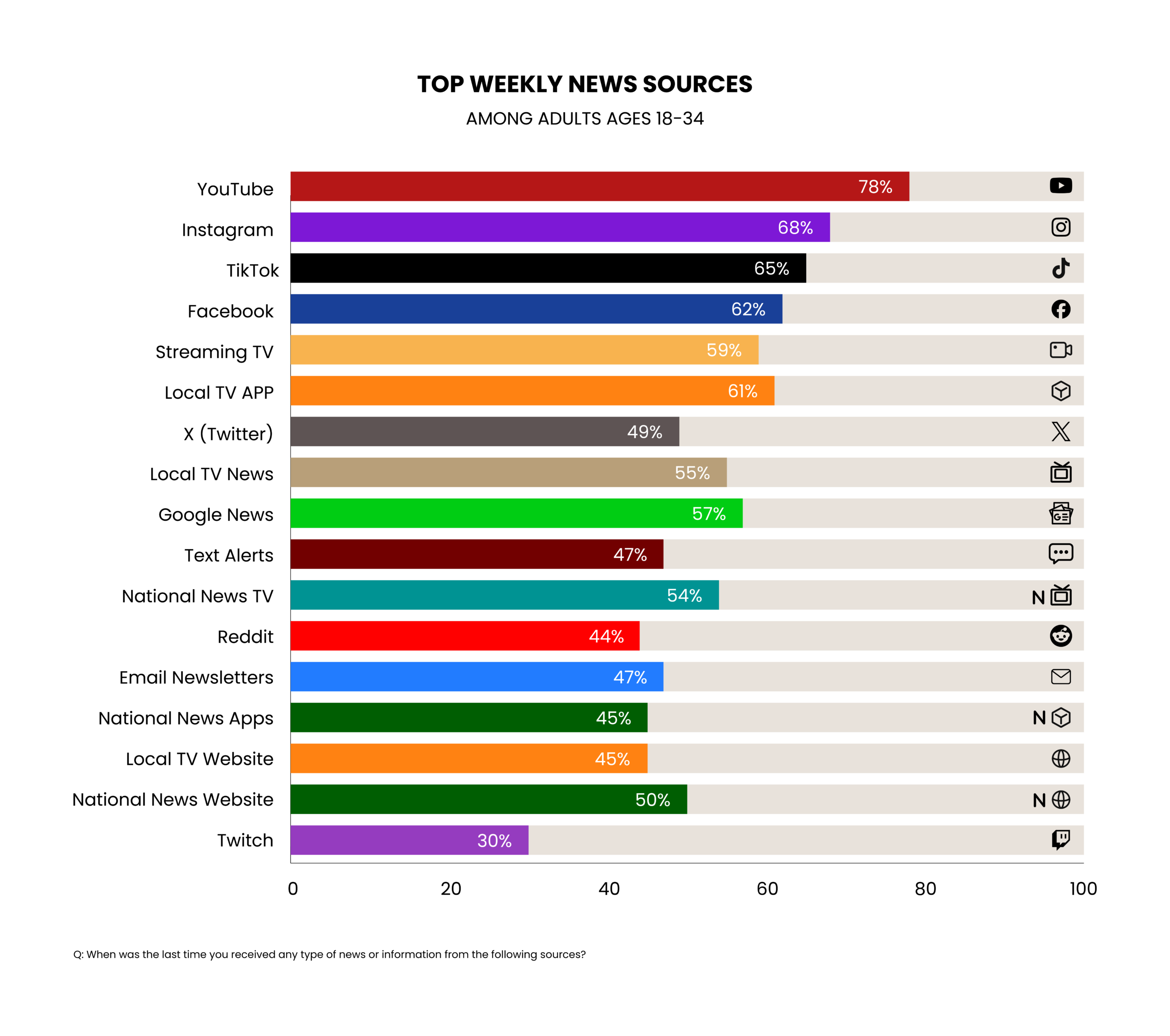
Although it is often assumed that young audiences have abandoned local television news, our data suggests a more complex picture. Among 18- to 34-year-olds, local news maintains significant visibility: 55% still watch local news programs on TV weekly, while 61% actively use local stations’ apps or weather apps. This places local outlets firmly in the middle tier of weekly news sources overall, ahead of Reddit, newsletters, and even national news websites and apps. Far from disappearing, local products are competing directly with national digital properties, and in many cases, surpassing them.
Equally important, the divide between traditional broadcasts and local digital products is narrower than industry conventions suggest. Weekly reach for local newscasts at 55% nearly matches that of local apps (61%), which suggests that linear programming remains a touchpoint for some young audiences. Although social media platforms still dominate news consumption in this demographic, the continued presence of local television within that ecosystem reveals a foothold that deserves greater attention.
Taken together, these findings challenge the assumption that young audiences have abandoned local news. Instead, they are engaging with it in ways that are very distinct from older generations, in that they are segmented, multiplatform, and often mediated by digital apps. For station managers, the opportunity is not to win them back to linear programming from TikTok or YouTube. Rather, newsrooms should recognize that this demographic does care about local news, and there is an opportunity to reach them if stations make their reporting part of the audience’s daily, multi-source news routine.
Younger viewers value local news for being trustworthy and clear, but they rarely feel it’s made for them. Innovation in visuals, like animation or motion graphics, can help bridge that generational disconnect.
Younger audiences give local TV high marks on the fundamentals. They see it as trustworthy (66%), relevant to their lives (64%), direct and to the point (65%), and comprehensive (63%). Local broadcasts also stand out for their visuals and graphics, which younger audiences rate highly as enhancing and enriching news stories. These are core strengths in a media environment where both credibility and compelling visual storytelling are hard to sustain.
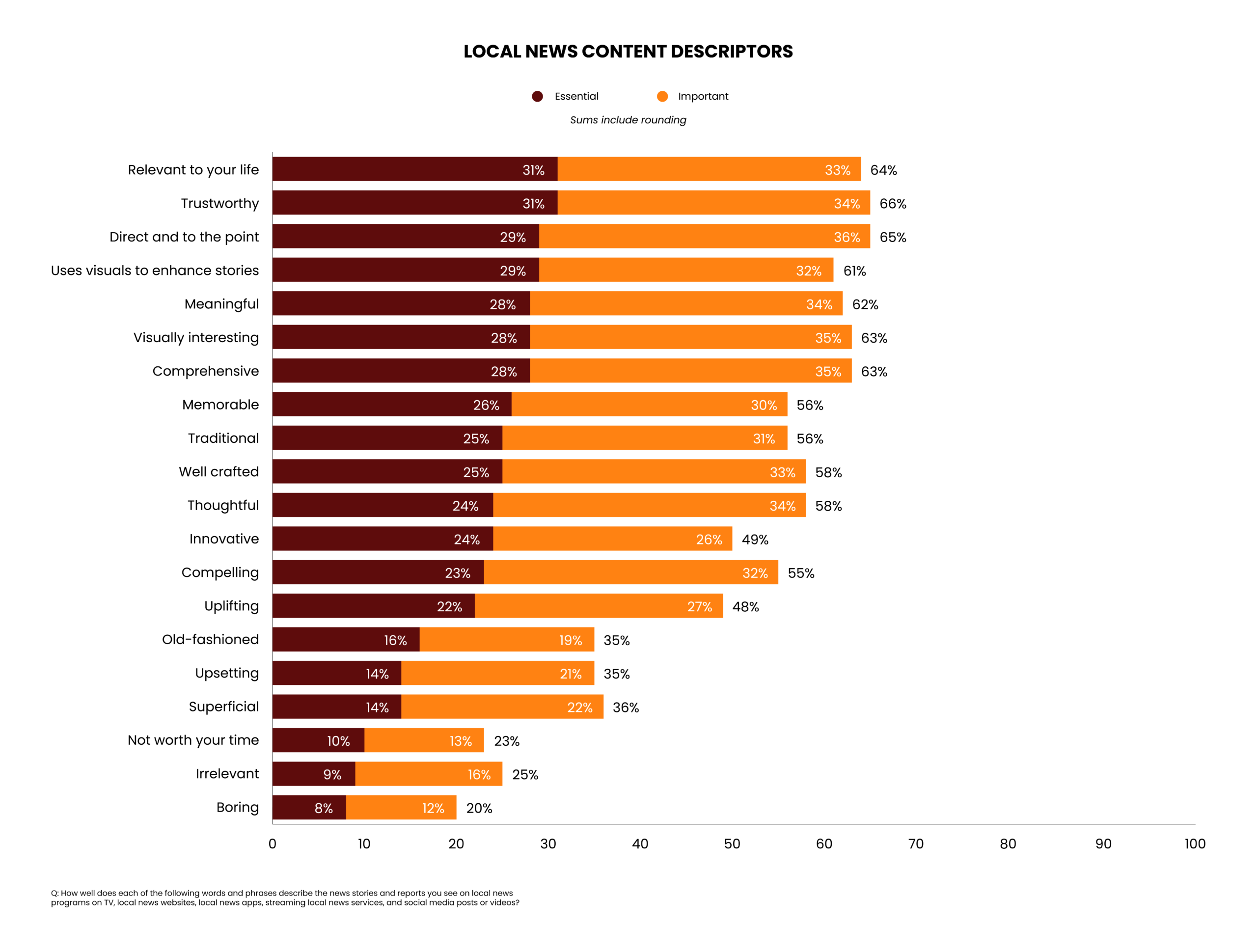
At the same time, the data reveals a perception gap. Qualities such as “innovative,” “uplifting,” and “compelling” score lower, signaling that while local news is respected, it often doesn’t feel fresh or emotionally resonant. And when asked who they believe local TV news is for, 36% of younger respondents said it was designed for “people older than you.” Only 15% felt it was “for people your age.” By contrast, local news apps on smartphones were far more likely to be seen as age-appropriate, with 33% saying they were “for people your age,” and streaming apps also performed better than broadcast.
While younger audiences continue to value local television’s credibility and straightforwardness, they often struggle to see themselves reflected in its tone and form. Using more digitally native forms of storytelling is one potential way of aligning with younger tastes and media preferences. Our earlier research on animation and visual innovation offers a proven approach. In that previous research, stories that incorporated motion graphics, data visualization, or short-form animation were more satisfying, clear, and memorable.7
One participant in our survey remarked on how local TV news stations could improve their offerings: “Make things more eye-catching through animations that have more of a special touch to them.”
Local news continues to anchor civic life. Younger audiences still turn to stations for a sense of place and belonging, but they also expect interactivity in return.
Nearly two-thirds (65%) of younger news consumers report feeling connected to their local communities, with this connection strengthening significantly with age, especially among Black and Hispanic audiences. Younger demographics are interested in local content as a category; they actively seek ways to strengthen their ties to place, a function that local TV news is well equipped to serve.
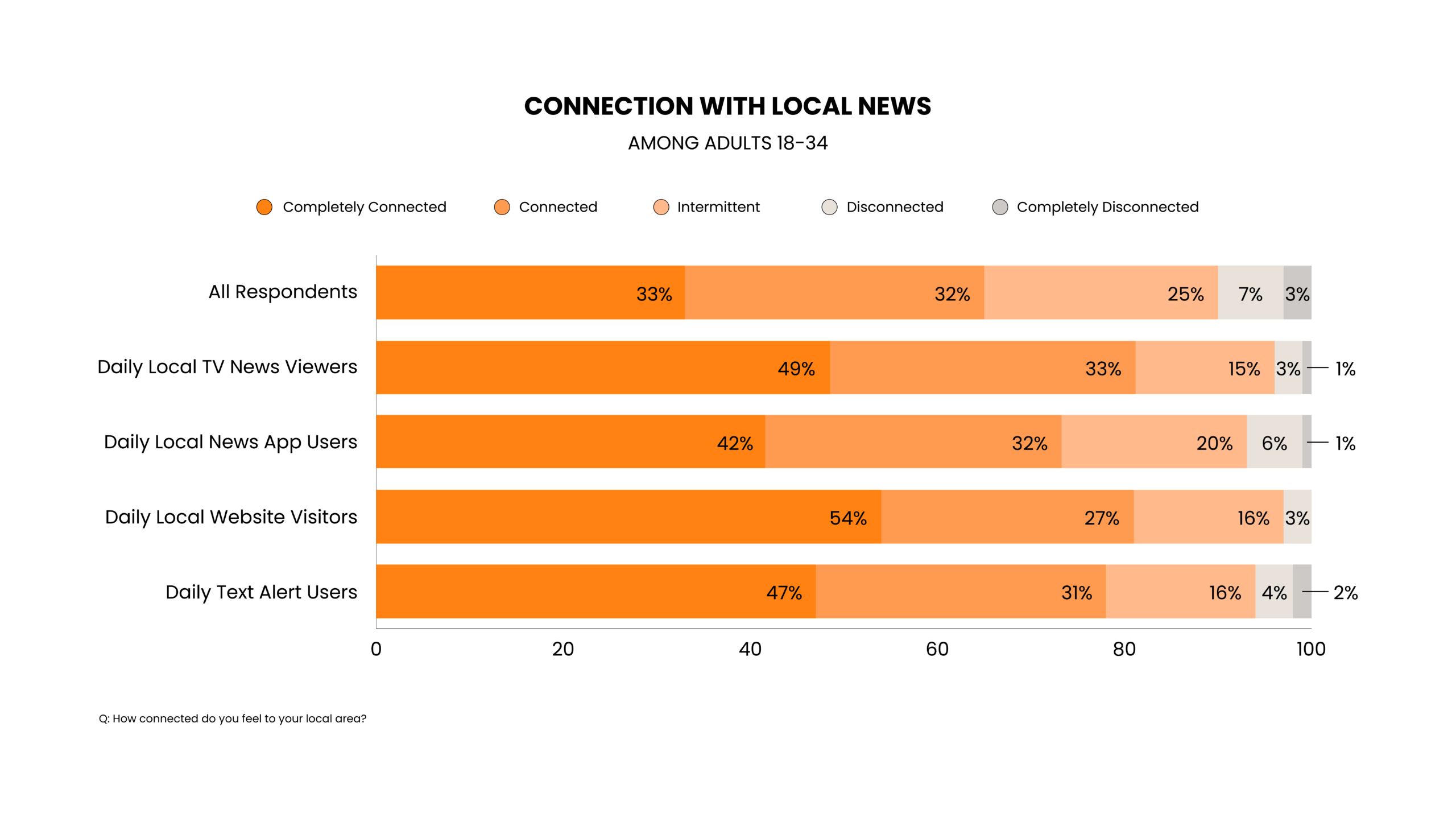
Overall, daily local news consumers have a deeper connection to their local areas. More specifically, daily consumers of local TV news and regular users of local station websites correlate with stronger community connections, surpassing even heavy social media users in this regard. While text alerts and apps provide valuable secondary touchpoints, our data shows that local TV and websites remain the most effective drivers of civic engagement.
One survey respondent, when asked what local news stations could do to improve their digital offerings, said: “I want to see more community outreach and help, I want truly local stories, I want to see how individuals are making the place better.”
Another respondent, when explaining why social media is their preferred way to get news, said: “…I like to read comments to see what others think about the news.”
Interactivity, whether through commenting, polls, live Q&As, or other feedback loops, has become part of how people experience news and affirm their sense of belonging to a community8, and younger audiences are no exception. The implications for station managers are significant: although social media captures attention, it fails to cultivate the same emotional investment in the community. Local TV and its digital extensions function as both news providers and community architects, a dual role that works to distinguish them within an oversaturated information landscape. This community-building capacity represents invaluable brand equity that stations should capitalize on.
Social media now defines the news routines of 18- to 34-year-olds, and they want local news to meet them there.
For 18- to 34-year-olds, social media is the undisputed center of news consumption. YouTube (78% weekly, 59% daily), Instagram (68% weekly, 52% daily), TikTok (65% weekly, 49% daily), and Facebook (62% weekly, 47% daily) top the list of most common news sources (See Figure 1). The intensity of use is equally striking. For each of the social media platforms, 75% or more of the weekly users are turning to these respective platforms every day for news and information.
Yet within this social-media-dominated landscape, local news is not erased. When asked how they want to get news from local TV stations, nearly half of 18- to 34-year-olds choose social media—far outpacing TV newscasts (19%) or apps (9%).
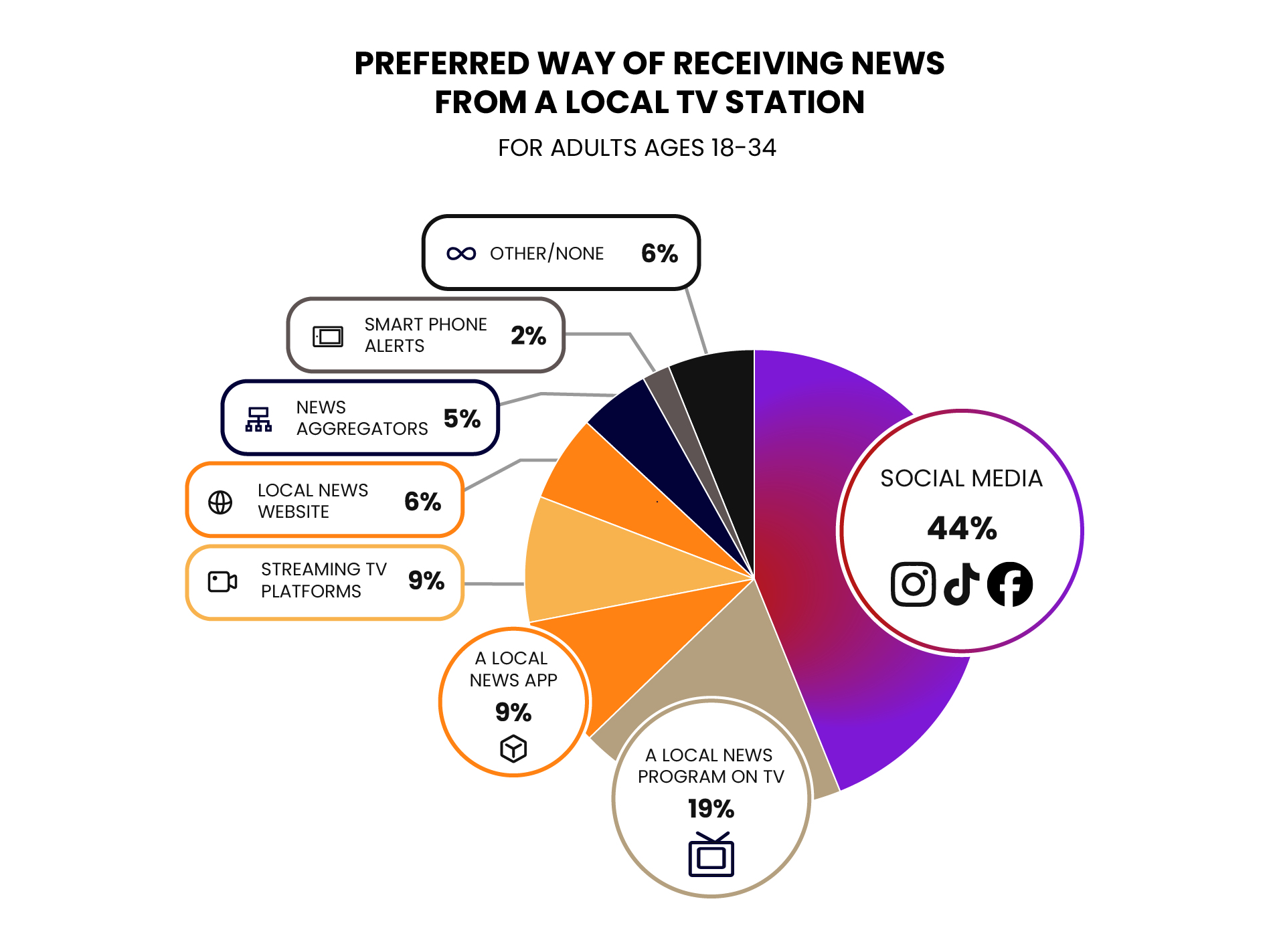
That means that local TV retains significant brand equity and credibility among young audiences, but that value translates most effectively within the platforms where they already consume content. The challenge is not a deficit of recognition or trust, but rather the need to adapt that established authority to the rapid, daily rhythms of social feeds. Local stations possess a crucial advantage that many digital-native competitors lack: deep-rooted credibility and instantly recognizable brands. The opportunity lies in redistributing this trust both to compete in social spaces and to distinguish themselves within increasingly crowded digital environments.
When asked why they would prefer to get local TV news on social media, one respondent said: “These platforms have the best context about the news being given, the reason why is the comment section. Sometimes, news isn’t truthful or accurate, but the comment section helps mitigate that.” This comment further underscores that active engagement is part of the recipe for creating a news environment that attracts and retains younger audiences.
Short local clips on social platforms often spark deeper engagement, but without clear links or calls to action, much of that curiosity leaks elsewhere.
Social news clips are not dead ends. Post-viewing behavior demonstrates that these clips often serve as the first step in a longer audience journey: 94% of viewers say they search for more information after they watch a local news video on social media. Substantial audience segments also like or share videos (87%), watch longer versions on station apps or websites (81%), or even make a point of tuning into the full local newscast on television (78%). For younger audiences, this undercuts the stereotype of social media news as fleeting or shallow. Instead, it demonstrates that local news clips can function as conversion funnels, entry points that channel audiences toward deeper, cross-platform engagement.
SmithGeiger Group president and co-founder Seth Geiger argues, “News cycles start on social media.” He says viewers in the 18-34 demographic often discover news events on social media and then seek out additional information from other news sources if appropriate. If the industry doesn’t feed the news cycle at the social media level and trigger these other behaviors, Geiger says, “the whole ecosystem falls apart.”
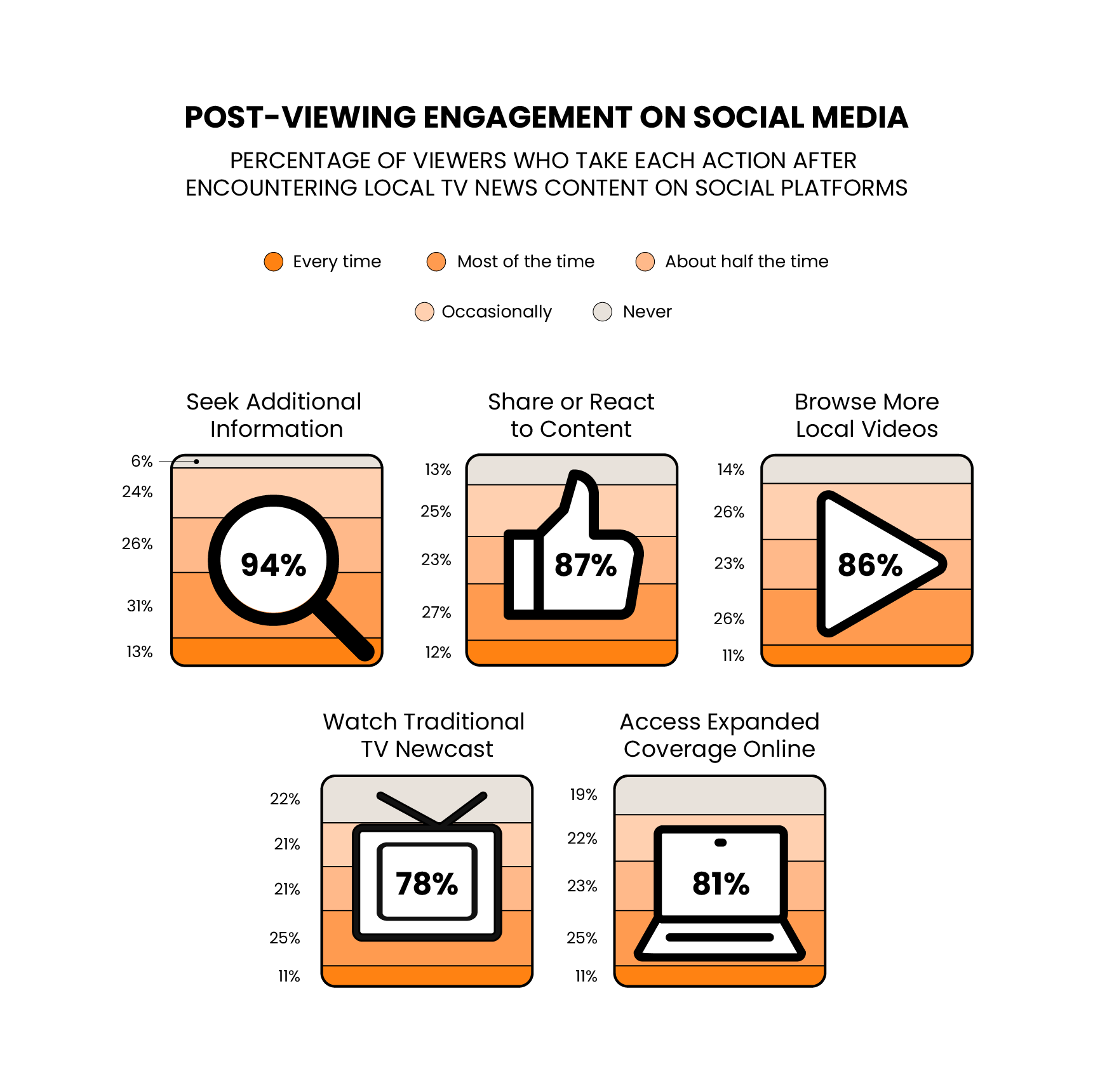
Yet the strongest post-viewing behavior, which is searching for more information, also highlights a leakage problem. Audiences are curious, but unless local stations capture that curiosity with stronger linking, prompts, or follow-up content, many of those searches will lead elsewhere. In other words, local news sparks demand but does not always capture the benefits.
At the same time, 86% of viewers say they make a point of looking at more local news videos after watching one. This indicates a clear appetite for a video ecosystem effect, where one clip can trigger a chain of repeat viewing. That binge potential only materializes if stations produce enough social-native video to keep audiences inside their orbit.
In the past year, newsrooms such as The Washington Post, CNN, and The New York Times have tapped into this potential. National newsrooms have adopted vertical video in their native apps and websites, incorporating a range of features, from including vertical videos as part of live news content to linking to corresponding articles. However, many local newsrooms have yet to seize these opportunities.
Each social platform rewards different rhythms and tones and should be approached as such. AI offers potential here if used within parameters that young audiences find acceptable.
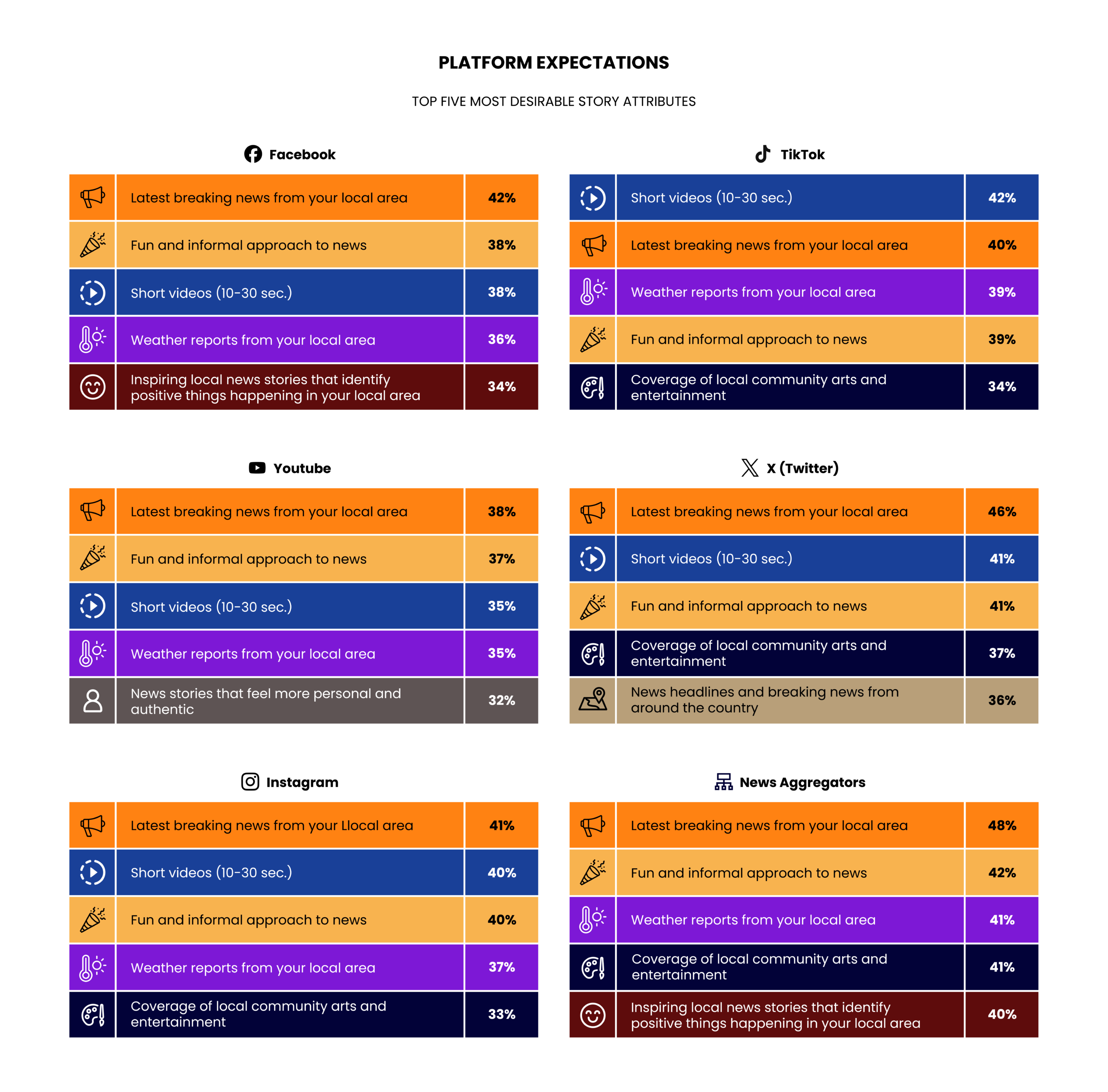
Audiences turn to every platform for breaking news, but what they expect beyond that category varies sharply by channel. On Facebook, 42% say local breaking news is their top expectation, while TikTok audiences emphasize short 10–30 second videos (42%) almost as strongly as breaking news itself (40%). Instagram users show a nearly identical pattern (41% for breaking news, 40% for short videos). YouTube audiences lean less on short form (35%) and more on news that feels personal and authentic (32%). In short, while breaking news is universally valued, each platform has distinct secondary expectations that stations must accommodate.
Beyond content type, tone also varies by platform: participants indicated they want a fun and informal approach to the news, with 38% of Facebook users, 39% of TikTok users, 41% of Instagram users, 37% of YouTube users, and 42% of news aggregator users saying this attribute was important to them. Weather and community lifestyle content remain secondary but significant expectations, with demand for local weather ranging from 35% on YouTube to 41% on news aggregators, and demand for community arts and entertainment coverage ranging from 33% on Instagram to 41% on news aggregators.
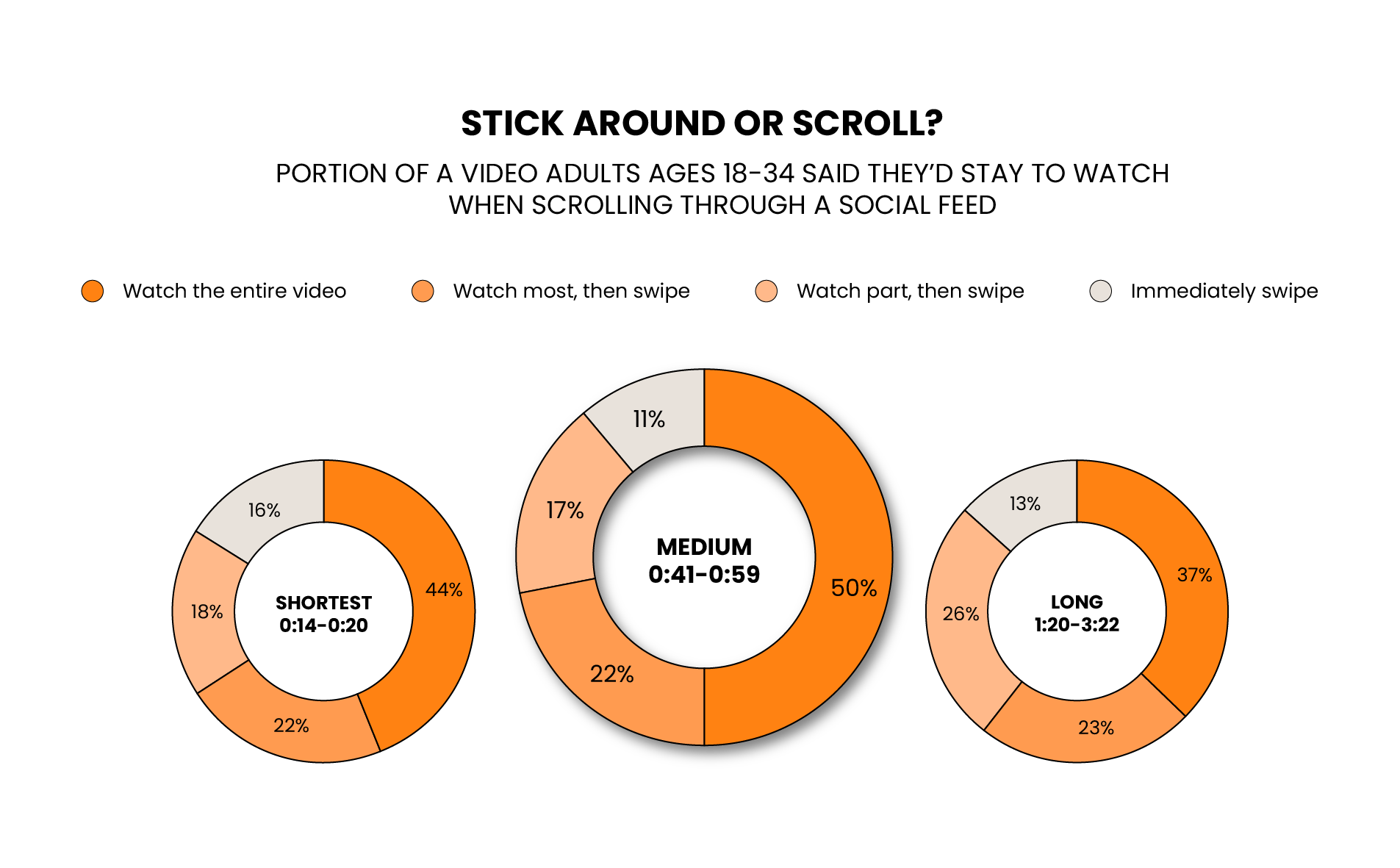
Layered on top of these expectations is story length and pacing. In viewing videos created by the RLTVN fellows, the medium-length story emerges as the preferred format among respondents (46% overall, 52% among daily local news app users), offering the right balance of pace (78%) and detail (62%). Social platforms are overwhelmingly the preferred venue, but the longer the video runs, the more that social advantage diminishes.
Meeting these fragmented platform expectations is resource-intensive, and most local newsrooms do not have the capacity to custom-build content for every channel. This is where AI becomes relevant as a potential tool to help scale and reformat content across platforms.
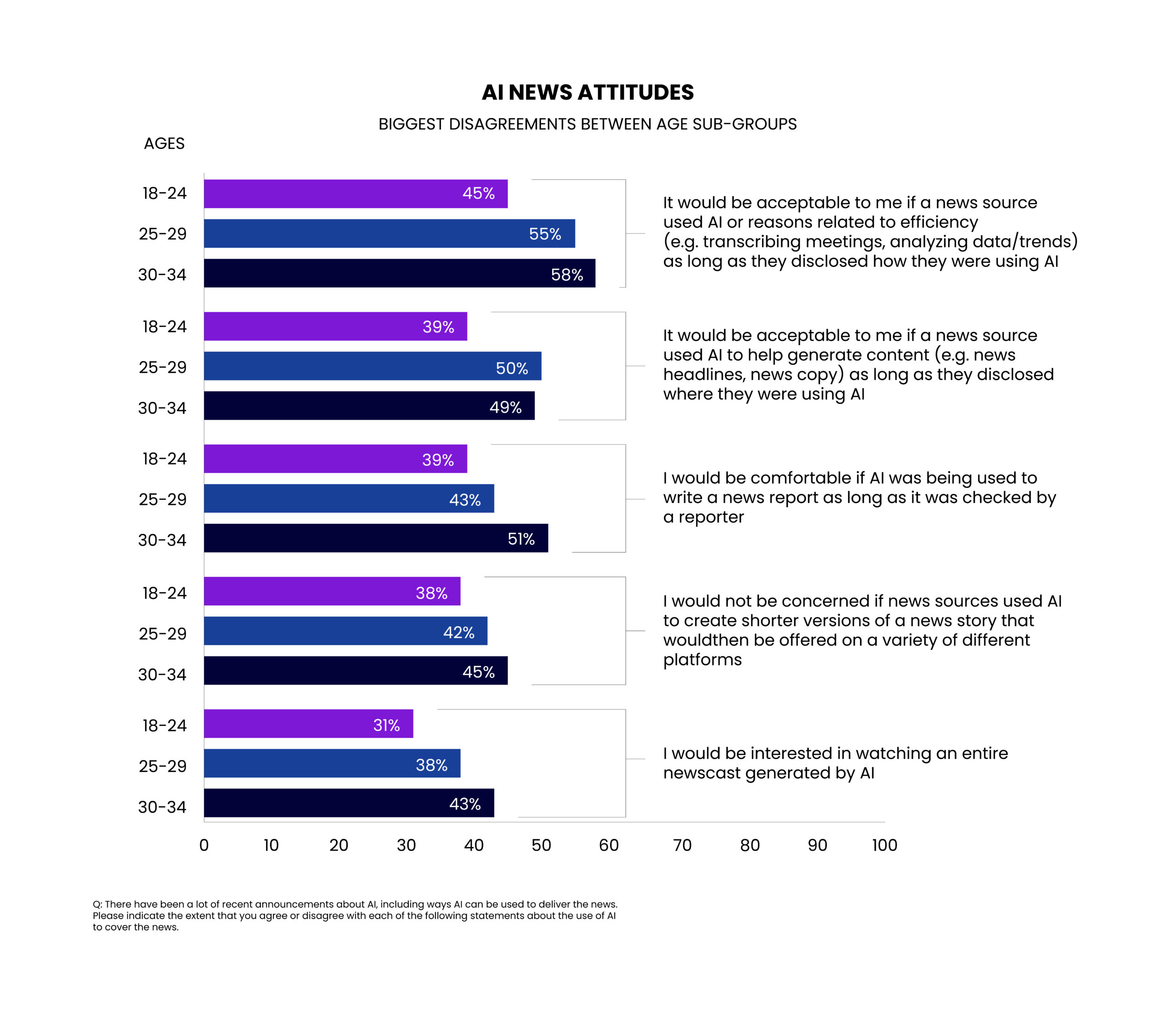
Our data show that audiences, especially 30-34 years old, are open to this kind of use. They are comfortable with AI in supportive roles like transcription, clip editing, or summaries, even as they remain skeptical about AI taking over storytelling entirely.
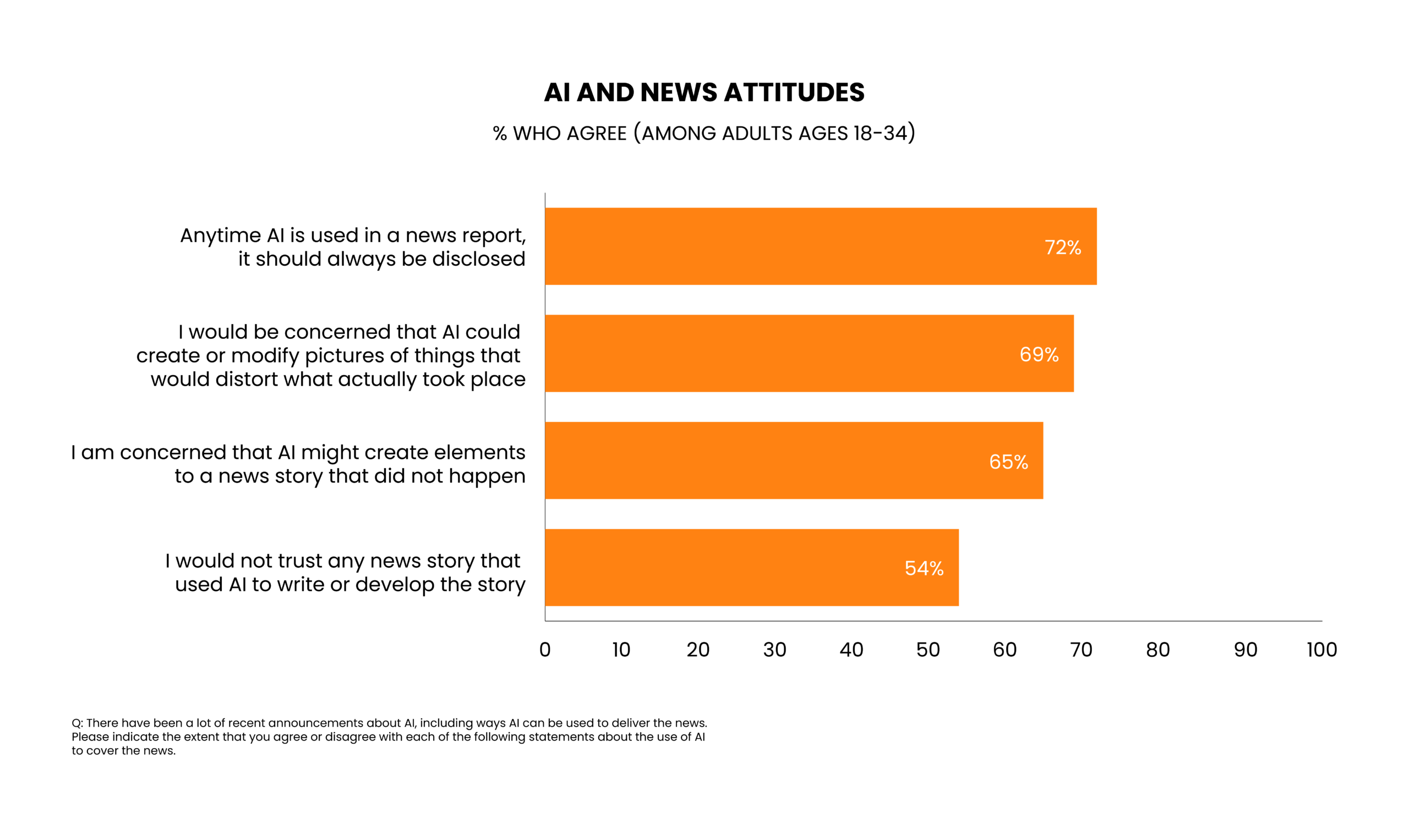
Particularly, nearly three-quarters of 18- to 34-year-olds surveyed (73%) say AI use should always be disclosed, and the majority worry about fabricated or distorted content. Audiences draw clear boundaries: while comfortable with AI in supportive roles, more than half would not trust a story written primarily by AI. Yet, over half are comfortable with AI handling backend tasks such as transcription or trend analysis, provided disclosure is clear. Roughly 45% are open to AI helping with headlines or short-form summaries, and a similar share says they would be comfortable with AI-written material as long as a reporter checked it. Where audiences draw the line is at full substitution, with just 36% saying they would be interested in an entirely AI-generated newscast, while 41% outright reject the idea.
Audiences already rely on local stations to make sense of how national and global stories hit home.
Local audiences continue to prize urgency and utility from their stations. Breaking news, weather, safety updates, and civic issues remain central pillars of local news value. These are the areas where local outlets hold a natural advantage over social platforms, which lean more heavily toward human interest, sports, and lifestyle content.
Younger audiences still want this kind of actionable information, but they expect it to come in an informal, approachable style that fits their daily scroll.
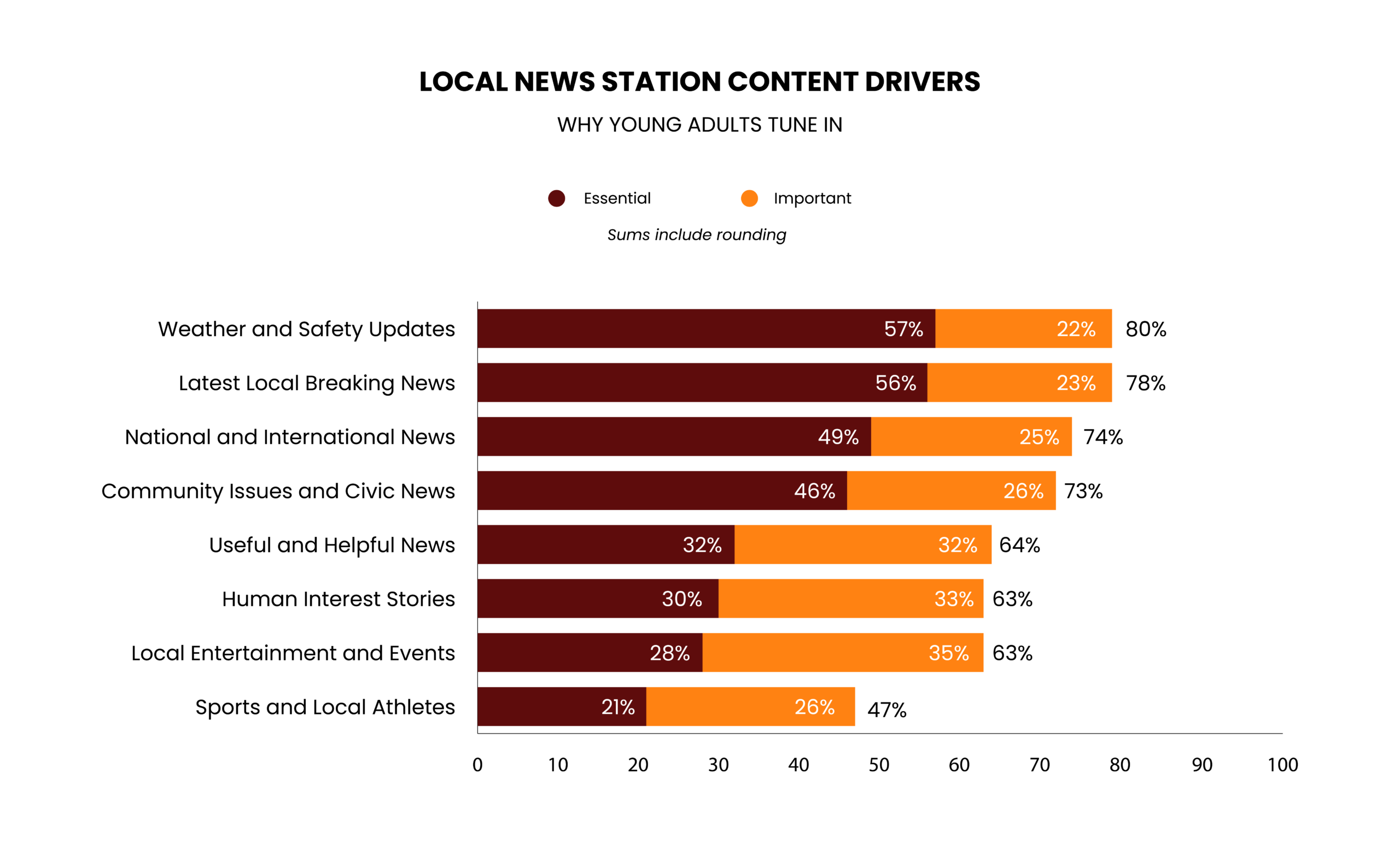
However, beneath those familiar drivers, there is another hidden strength. Audiences associate national and international news from their local TV stations at nearly the same level as they do local weather and breaking news coverage. Younger viewers are already turning to local stations to understand how global and national events ripple into their communities. As RLTVN fellow Maggie Cole observes, “Local is just a word when the internet is involved.”
This “local-national bridge” is often an overlooked role for local outlets, and one that many stations underplay. While national networks dominate headlines, audiences still look for someone to explain what those stories mean for their city, their schools, and their neighborhoods. Platforms such as Courier Newsroom and Axios Local are already experimenting with this bridge in different ways.
The strategic opening for local platforms is to claim the bridge role explicitly, even as they double down on breaking news or weather. That takes on the shape of delivering critical updates in real time, and showing how national events live at the local level. If done well and in the tone younger audiences expect, this bridge function can differentiate local news in a landscape where utility alone might no longer be enough.
Local journalists remain among the most trusted community figures, far ahead of influencers or podcasters.
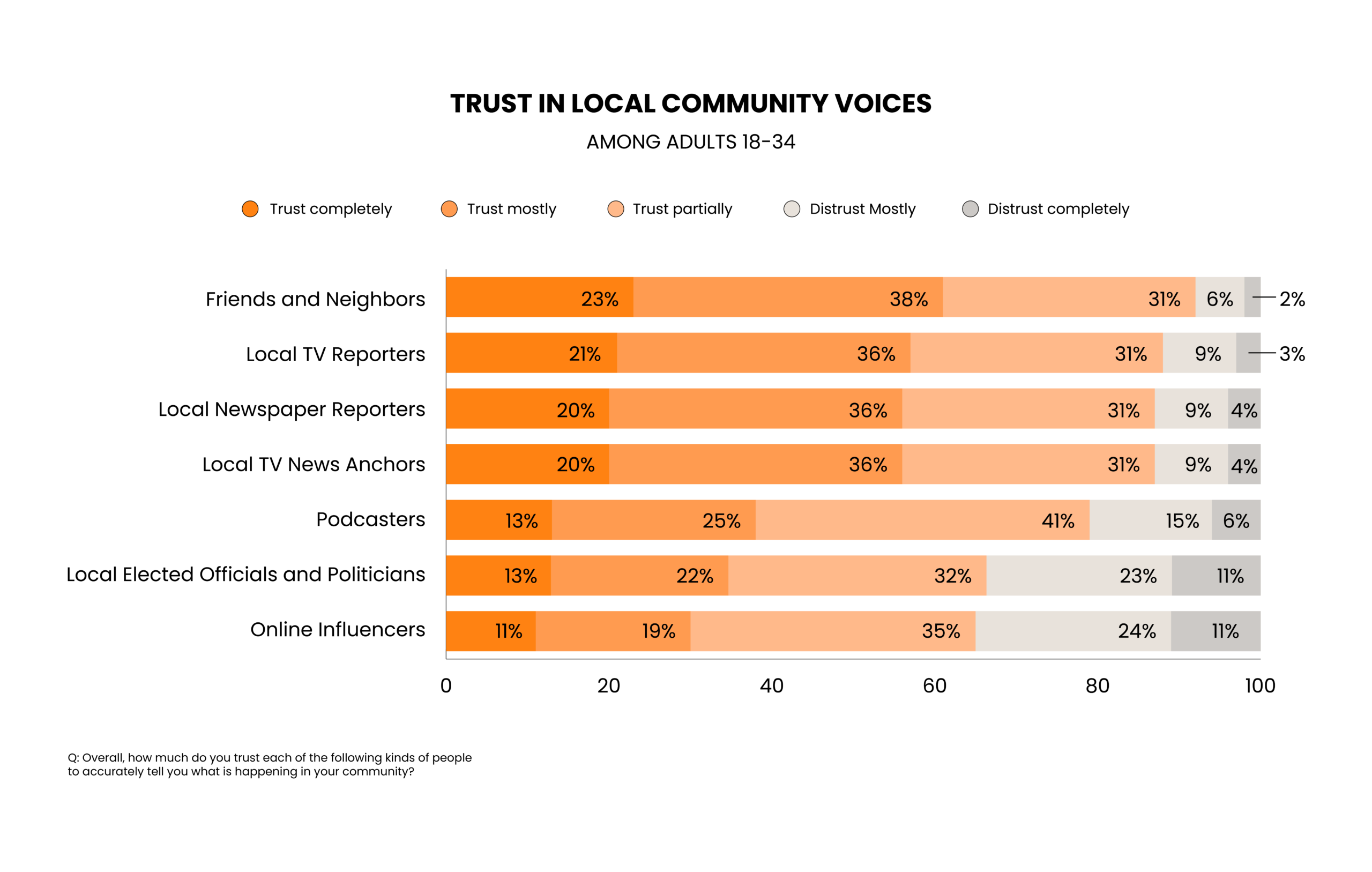
Local TV reporters (57%) and local TV anchors (56%) rank among the most trusted community voices. In fact, nearly nine in ten young adults express at least some level of trust in them. Both score substantially higher than podcasters (38%), local elected officials and politicians (35%), and online influencers (30%). This trust advantage is striking given the cultural visibility of podcasters and influencers, particularly among younger audiences. Nationally, podcasts enjoy moderate to high trust, with 87% of listeners saying that they expect accuracy from news podcasts9, and roughly two-thirds say they trust news podcasts10, yet at the community level, local journalists remain the more credible and reliable voices.
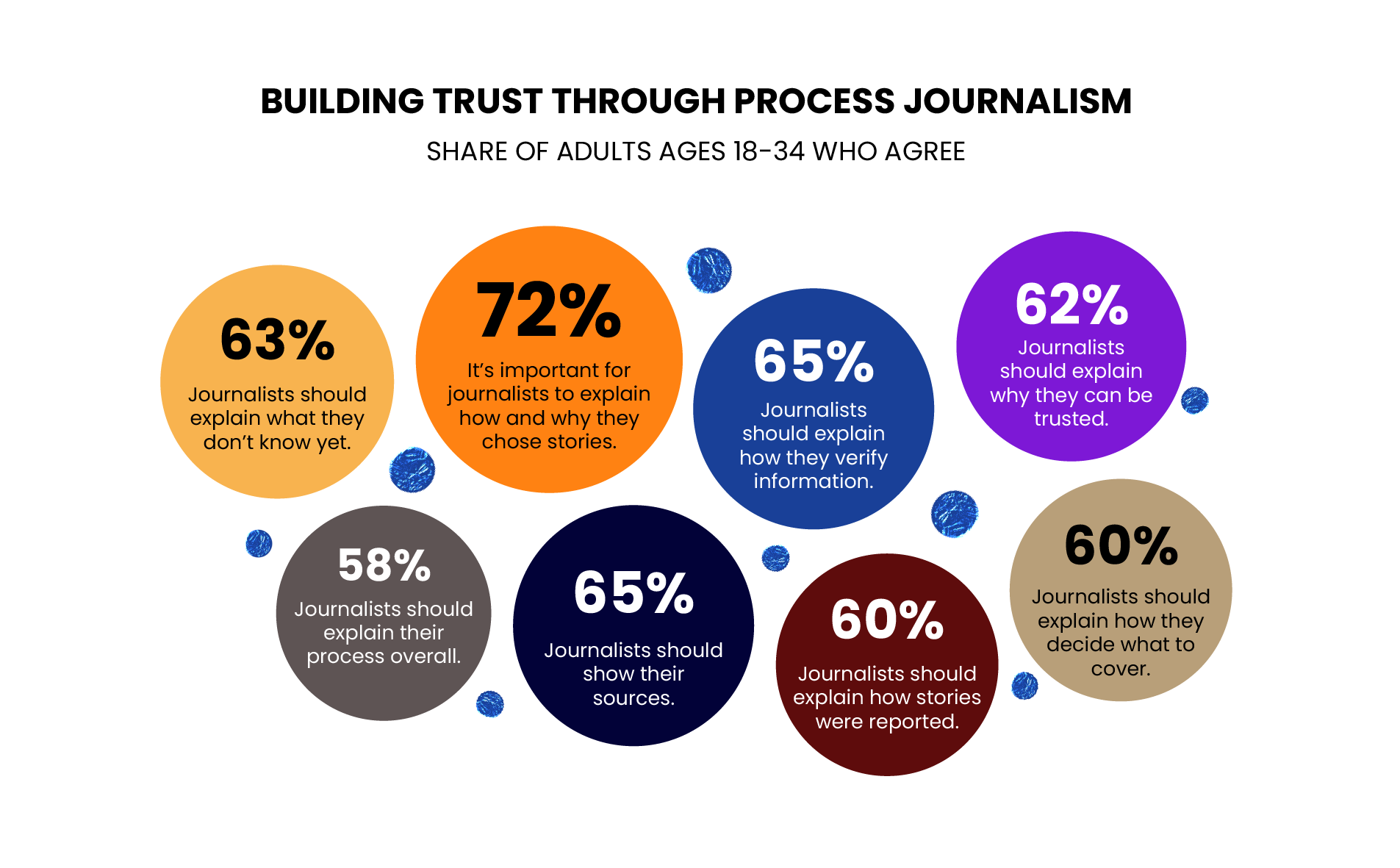
Friends and neighbors remain the single most trusted source at 61%, but local reporters and anchors are close behind. What drives that trust is a combination of who delivers the news and how it is delivered. Nearly three-quarters (72%)
say they trust a local news story more when it clearly shows how the facts and information were gathered, and 63% say they would trust it more if journalists explicitly included the steps they took to get the story. Two-thirds (65%) prefer a
raw, immediate approach to coverage rather than a perfectly polished package, and they expect local stations to deliver news from the scene as events are still unfolding. For many, the process is part of the story itself: 62% say coverage would be more compelling if reporters explained how they gathered it, and 60% say they would watch behind-the-scenes content showing reporting in action.
While trust is a highly contested and imperfect metric of journalism—scholars warn it can oversimplify complex audience-newsroom dynamics11—there is still real value, especially at the local level, in knowing whether communities trust you or not. Local TV newsrooms should thus treat trust and indications of it as a diagnostic tool, less as an outcome to maximize, and more as a metric that is indicative of other dynamics between a newsroom and its community.
The category of “local news” is too often treated as self-explanatory, as if geography alone defines its identity and public value. Yet the survey data here shows the limits of a purely spatial definition. More than half of 18- to 34-year-olds still watch local newscasts weekly, 94% seek additional information after encountering local news on social media, and local journalists rank well above influencers, podcasters, and elected officials as trusted community voices. Younger audiences attribute value to local stations both because they are nearby and because they perform functions that extend beyond geography. They provide urgent and actionable information, they sustain a sense of connection to community, and they embody trustworthiness and relevance in ways that other information sources often do not.
If we accept this, then “local” must be understood less as a descriptive label and more as a framework, that is a method of doing news. Researchers on community journalism have long noted that “localness” is relational and enacted rather
than fixed in space.12 In other words, we must move beyond defining “local” merely by proximity to defining it through active engagement and commitment to community journalism. A station may be geographically situated within a community and still fail to meet the expectations of what it means to be local if it does not deliver on urgency, connection, or trust—as our data suggest: daily local news consumers report stronger community connection than even heavy social media users, and nearly three-quarters of respondents say they trust local news more when it clearly shows how information was gathered.
What the findings here add is an empirical account of how young audiences who have grown up in an increasingly globalized world themselves define and measure enacted localness from stations. Thus, to embrace “local” as a method
means accepting its obligations, to approach stories through the lens of lived community experience, to contextualize broader issues in ways that resonate with place, and to acknowledge that credibility at the community level is earned through practice rather than inherited through location.
Liz Allison and Laurie Slap at the Stanton Foundation have supported this project with encouragement and insight through multiple phases. The foundation’s support has been essential, and Northeastern faculty and students alike are deeply grateful. Digital Content Creator Fellows Angela Chen, Maggie Cole, and Leanna Scachetti along with Visual Content Producer Fellow Gabrielle Aidam were instrumental in this research. They took a risk spending a year doing innovative and novel work at top-market television stations. That work proved foundational for this report.
We thank the newsrooms and management at WCBS-TV New York, WLS-TV Chicago, and WCVB-TV Boston for their wonderful partnerships.
We would like to thank all of the Northeastern students who have worked on this project over the years, many of whom have gone on to become distinguished young journalists in their own right: Breanna Adel, Quillan Anderson, Vivian Aviles, Gigi Barnett, Zach Ben-Amots, Celena Budd, Phil Butler, Annah Chaya, Ricole Ching, Nick Cortese, Kate Deskey, Kristina DaPonte, Michael Earls, Ruchika Erravandla, Hannah Escandon, Aki Gaythwaite, Kayla Goldman, Sangya Gupta, Kylee Hendrie, Heidi Ho, Jackson Laramee, Clara McCourt, Isa Meyers, Elijah Nicholson-Messmer, Emily Niedermeyer, Auden Oakes, Zipporah Osei, Kwadjo Otoo, Ziyu Peng, Jeta Perjuci, Katherine Pinnock, April Qian, Pavithra Rajesh, Ananya Singh, and Aiden Stein. You can see many of our project alumni on screen now on broadcasts across the country (or working behind the scenes to make news happen).
Our gratitude again goes to Seth Geiger and all those at his firm SmithGeiger including Mark Jaimes and Leila Mack. Seth’s wisdom has been critical.
We would also like to thank Susan Conover, Emma Caterinicchio, and Tammi Westgate for their vital work in helping us administer this project.
Our thanks to School of Journalism Director Jonathan Kaufman; R. Benjamin Knapp, Dean of the College of Arts, Media and Design; and Brooke Foucault Welles, Senior Associate Dean for Academic Affairs for valuing this work and supporting it throughout.
Further information about the experiments and findings are contained in REINVENT: A Survival Guide for Local TV News. For more information on our project, please visit our website.
For researchers or practitioners looking to build upon the data, please send inquiries to m.beaudet@northeastern.edu and j.wihbey@northeastern.edu.
Reports & Papers

Reports & Papers