
Level Up: Why hierarchies are broken and how to fix them
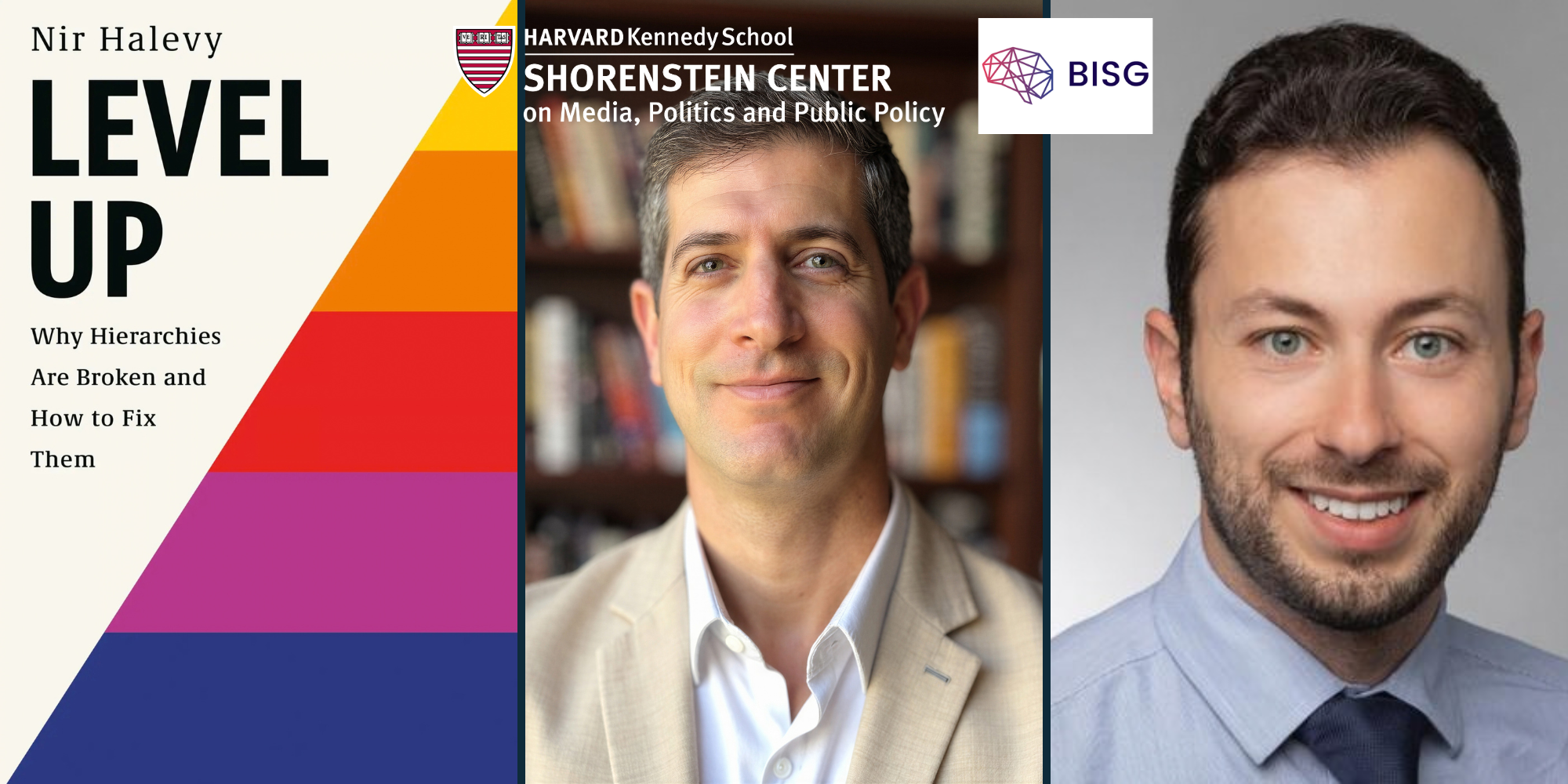
Workplace hierarchies can evoke fear, anger, and envy in employees who feel caught in competition with coworkers and under relentless pressure from dominant bosses. The ensuing uncertainty and instability harm employee well-being and undermine organizational performance. Stanford social influence expert Nir Halevy argues that this is because we’re doing hierarchy wrong. When done right, hierarchies can be beneficial, and not just for whoever is at the top.
In his book, Halevy draws on scientific evidence, interviews, and real-world stories to explain how you can diagnose a broken hierarchy and help fix it, introducing a framework and concrete solutions that apply to employees across ranks and roles.
Join BISG for an interactive book talk with Stanford Professor Nir Halevy, author of Level Up: Why Hierarchies Are Broken and How to Fix Them, moderated by Julian Zlatev of Harvard Business School to learn practical ways to navigate and shape organizational hierarchies.
Speakers:
Nir Halevy is a Professor of Organizational Behavior at Stanford University’s Graduate School of Business. His research focuses on social influence processes in negotiations, organizational hierarchies, and social networks. He also studies decision-making, group processes and intergroup relations. He has taught courses and workshops on these topics to thousands of students, entrepreneurs, executives, engineers, physicians, and scientists. He is the author of Level Up: Why Hierarchies are Broken and How to Fix Them, and creator of the strategy game Promotion!
Julian Zlatev is an assistant professor of business administration in the Negotiation, Organizations & Markets Unit. He teaches the second-year Negotiation course.
Professor Zlatev’s research interests include ethics and morality, trust, impression formation, negotiation, and prosocial behavior. He earned a Ph.D. in business administration from Stanford University and a B.A. in psychology from Northwestern University. His work has been published in journals such as Proceedings of the National Academy of Sciences, Journal of Personality and Social Psychology, and Organizational Behavior and Human Decision Processes.
This event is organized by the Behavioral Insights Student Group (BISG)