
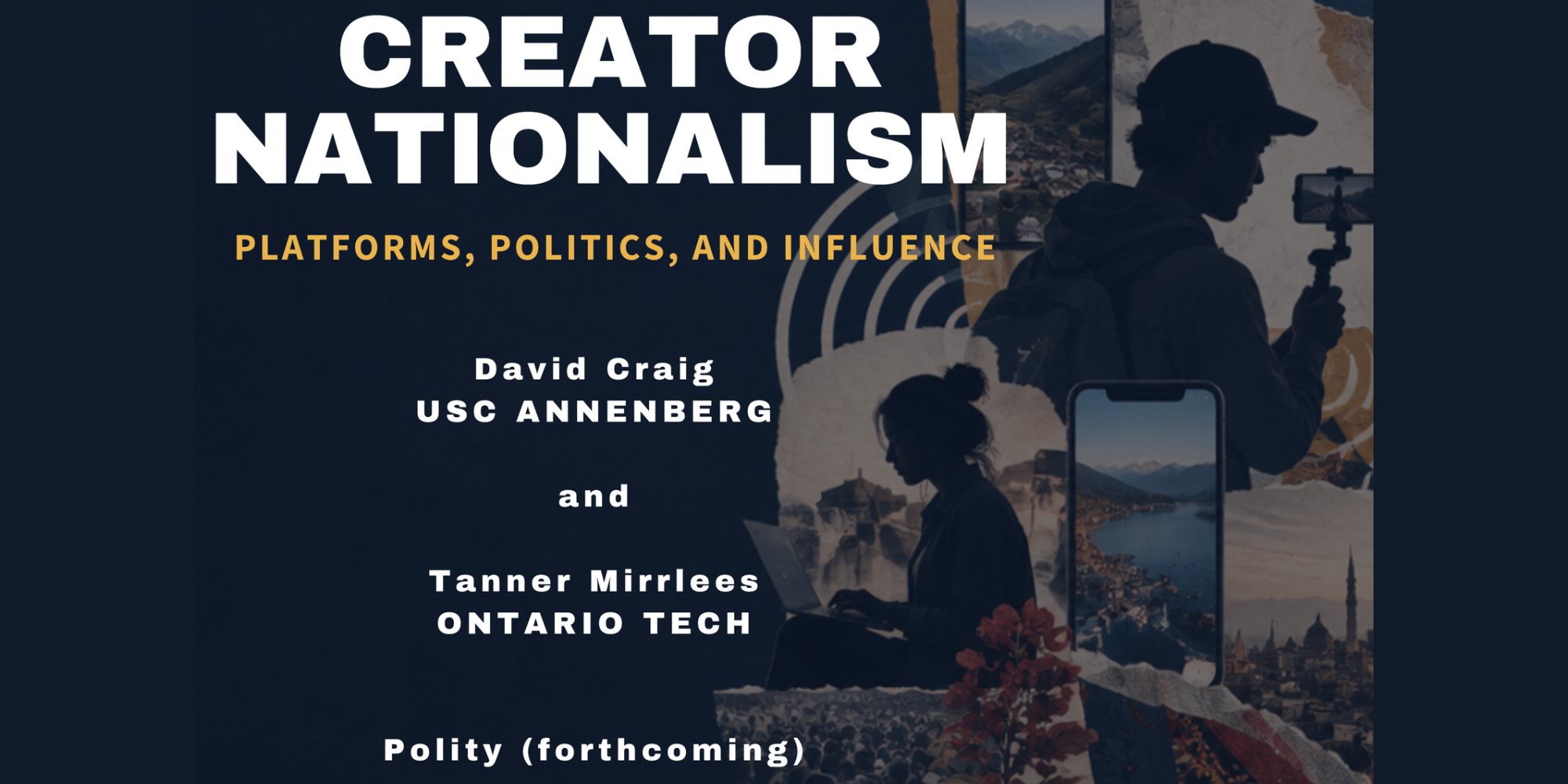
Creator Nationalism: Platforms, Politics, and Influence
Speakers
What connects Donald Trump’s creator-driven MAGA movement, Narendra Modi’s status as India’s “Influencer-in-Chief,” Jair Bolsonaro’s alliance with Brazil’s evangelical influencers, China’s elevation of Li Ziqi as an agent of cultural soft power, Thailand’s recruitment of creators to promote the nation abroad, Ukrainian gamers transforming their communities into wartime support networks, and Indigenous creators using social media to pursue visibility, recognition, and sovereignty?
In this talk, USC Annenberg communication professor David Craig will discuss his forthcoming book, Creator Nationalism: Platforms, Politics, and Influence (Wiley, 2027), co-authored with Ontario Tech Professor Tanner Mirrlees, which conceptualizes how social media creators and influencers figure prominently in the construction, imagination, commercialization, and contestation of nationalism.
Drawing on cases from around the world, including research conducted during a Global Fulbright Fellowship in Chile, Israel, and Thailand, the talk considers how creators work with, alongside, and against political parties, governments, militaries, religious institutions, corporations, NGOs, and social movements. It distinguishes among political, geopolitical, religious, civic, cultural, and stateless forms of creator nationalism while tracing the platform infrastructures and business models that enable them, as well as the expanding policies and interventions that both restrict and promote them.
These arguments intersect with concerns surrounding democratic and internet governance, political communication, public diplomacy, international security, civic mobilization, human rights, misinformation, and technology regulation. They also raise an urgent policy question: As creators become consequential political intermediaries, how might they be governed more effectively and held accountable? This question also informs Professor Craig’s Shorenstein Center fellowship on creator rights and policy.
Key takeaways and questions
-
Social media creators are no longer peripheral commentators; they are part of the infrastructure through which political legitimacy and national identity are produced.
-
Creator nationalism can strengthen authoritarianism, exclusion, and militarism while also supporting civic participation, marginalized communities, and cultural sovereignty.
-
Effective policy must move beyond content moderation to address platform ownership, algorithmic visibility, sponsorship transparency, creator labor, institutional partnerships, and unequal access to power.
-
How might creator nationalism also contribute to a more progressive 21st Century cosmopolitanism?
Speaker
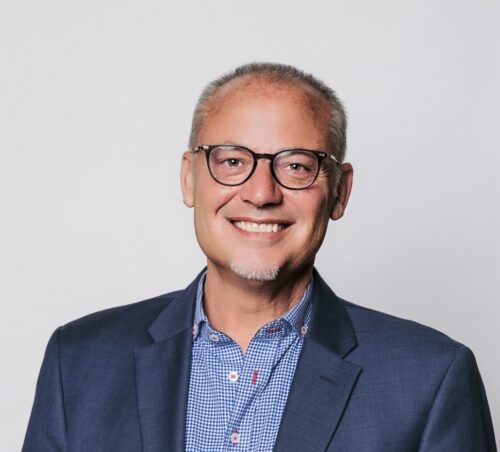
For more than a decade, USC Annenberg Communication Professor David Craig has mapped the structural and material conditions driving the rise of global creator cultures across competing global, regional, and national platform systems. His research examines how these cultures are shaped by distinctive political, economic, sociocultural, and technological conditions. His scholarship includes three published books, three more under contract, approximately four dozen articles and published commentaries, presentations at more than 100 academic conferences, and numerous appearances in news media and documentaries. Craig is a fellow at the Shorenstein Center at Harvard’s Kennedy School, a visiting scholar at the Center for Advanced Global Research at Penn Annenberg, a faculty affiliate at the Berkman Klein Center, a visiting professor at Shanghai Jiao Tong University, and the USC director of the Global Media and Communication graduate program in partnership with the London School of Economics.