Videos
Sports betting on campus: What journalists need to know

Disagreement: it is both inevitable and essential for everything from high-pressure workplace decisions, to public communications on divisive topics, to governing democratic societies. So, how can we, in both our personal and professional lives, navigate disagreement constructively?
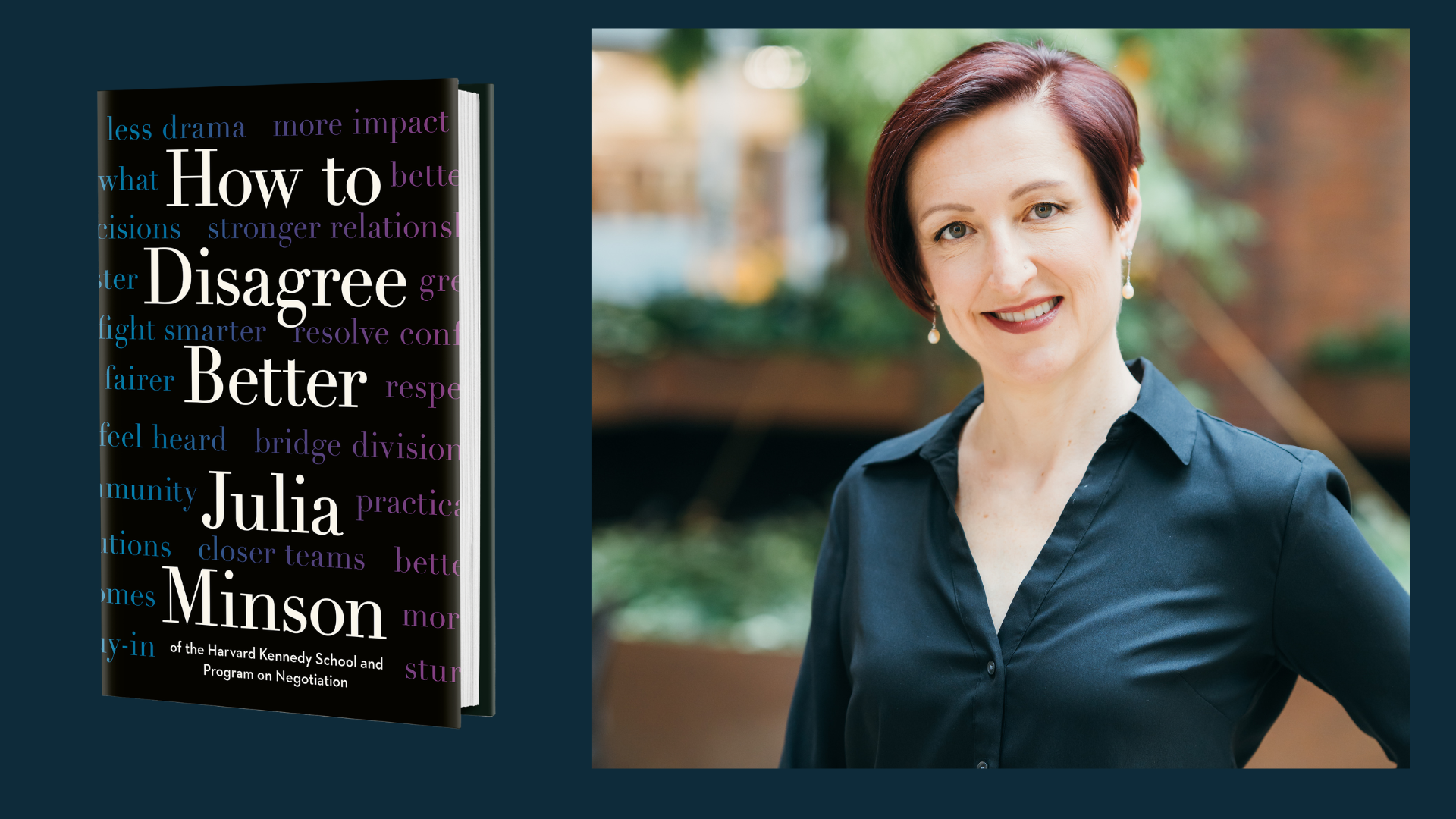
Join decision scientist and Shorenstein Center resident faculty member Julia Minson for a conversation centered on her new book, “How to Disagree Better” (published March 24, 2026), moderated by Shorenstein Center Director Nancy Gibbs. In her highly anticipated book, Minson reveals the hidden skill that helps the best mediators and negotiators break through divides: displaying receptiveness to opposing views. Through original research and engaging stories from the real world, “How to Disagree Better” shows you why traditional persuasion strategies don’t work as well as you think they do and that disagreeing better is a skill all of us can leverage.
In this video, viewers will learn:
– How to bridge divisions of all kinds – including with sources and interview subjects – using receptiveness strategies
– How to engage with conflicting opinions, values, and judgements, including with people who may write off your profession or expertise as a matter of their own values
– How to apply conversational receptivity techniques at home and at work, and with sources and audiences
Julia Minson is a professor at the Harvard Kennedy School. She is a behavioral scientist with extensive research experience in conflict, communication, negotiations, and decision-making. Her primary line of research addresses the “psychology of disagreement”—how people engage with opinions, judgments, and decisions that differ from their own. Her work has been published in top academic outlets and covered by CNN, TIME, The Atlantic, The Washington Post, and The New York Times.
Videos
Videos
Videos