

Commentary
Rethinking Public Media, Together

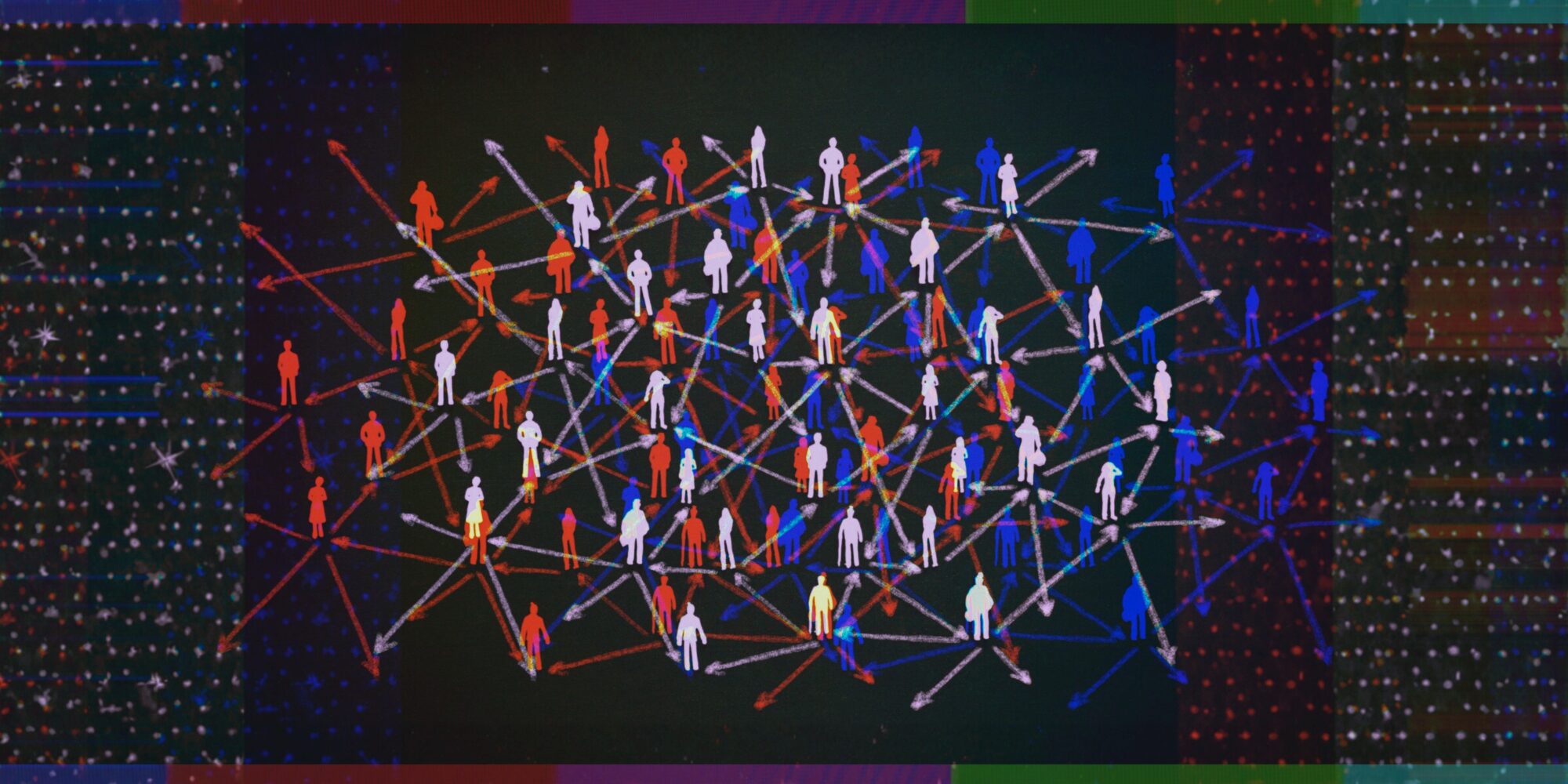
Author’s Note: This blog series is part of my research project as a Documentary Film in the Public Interest Fellow at the Harvard Kennedy School’s Shorenstein Center for Media, Politics, and Public Policy. Building from existing public media research and policy analysis, this work is shared in progress to surface points of alignment, areas of tension, and practical constraints as we consider how public-interest media infrastructure might be redesigned for today’s conditions.
This research is informed by over twenty years of experience working across community-driven media, public media, independent film, and cultural policy, including serving as Director of Film & Media Arts at the National Endowment for the Arts (NEA) and leading regional and national film and media arts organizations. Much of my work has focused on building, supporting, and stewarding public-interest infrastructure. I approach this project not as an abstract exercise, but from lived experience inside the systems I’m examining, and with a deep respect for both their achievements and their limitations.
_
For more than half a century, American media policy has grappled with a central question: In a media system dominated by private markets, what kinds of civic infrastructure are necessary to serve the public interest—and how do we determine what constitutes the public interest?
This has never been a question about content alone. It is a question about structure: how media systems are governed, financed, and held accountable, and which institutions are expected to sustain civic, educational, and democratic life through media. Markets are powerful engines for scale and innovation, but they are not designed to define or safeguard public service on their own. This distinction between content and structure remains central to contemporary analyses of public media. The Wyncote Foundation, for example, emphasizes that public broadcasting’s current challenges are rooted less in programming quality than in governance, institutional culture, and incentives that have not kept pace with digital distribution, demographic change, or a polarized public sphere.1
In thinking through this challenge, I’ve found it useful to return to a moment when public-interest obligations were articulated with unusual clarity. What follows is a brief historical context for my early thinking about how a co-created infrastructure might serve the future of civic media.2
In 1961, newly appointed FCC Chairman Newton Minow delivered his first major speech to the National Association of Broadcasters. His warning that television had become a “vast wasteland” is often remembered as a critique of programming quality. But that reading misses the point. Minow was not arguing about taste. He was arguing about responsibility.
Minow reminded broadcasters that they operated by license, using public spectrum, and that this carried affirmative obligations. “The public interest,” he observed, “is what the public is interested in,” but he was careful to note that popularity alone could not be the standard. A system governed almost entirely by commercial incentives, with weak accountability to the public, would inevitably fall short…no matter how much content it produced or how large its audience became.3
What concerned Minow was not entertainment itself, but the absence of durable structures that rewarded service to the public. When television failed, he argued, it was not because the medium lacked potential, but because the system surrounding it did not consistently support that potential in the public interest.
That framing matters now as much as it did then. Minow was not calling for better programs so much as for better systems, capable of carrying public-interest obligations forward over time, rather than leaving them to chance, goodwill, or market forces alone.
This distinction between content and structure is echoed in public media scholarship that reframes the public interest not as a matter of taste or popularity, but as a function of how publics themselves form. Research from the Center for Media & Social Impact’s Future of Public Media Project argues that public media’s democratic role is not simply to reach large audiences, but to help generate publics around shared problems. In this framework, publics are not demographic segments or ratings categories; they are groups of people who recognize common stakes, exchange information, and deliberate about what to do next.4
Minow’s speech did not resolve these questions, but it did something essential: it made them unavoidable. By reframing broadcasting as a public trust rather than a purely commercial enterprise, he helped catalyze a broader reexamination of how public-interest obligations could be carried forward in practice. Within a few years, that reexamination took institutional form through the creation of the Carnegie Commission on Educational Television.
The Carnegie Commission’s 1967 report, Public Television: A Program for Action, represented one of the most consequential attempts to translate those public-interest obligations into a durable institutional form. The Commission did not begin by asking what kinds of programs were missing from American television. Instead, it asked what kind of system would be required to reliably serve public purposes that commercial markets were structurally ill-equipped to sustain.
The report articulated several foundational principles. First was independence: public-interest media needed insulation from both political interference and market pressure in order to earn public trust. Second was decentralization: the Commission rejected a centralized national broadcaster in favor of a federated system built from strong local and regional institutions. Third was local production capacity: the Commission emphasized that public-interest media must be rooted in community life, reflecting regional cultures, histories, and civic concerns rather than relying primarily on centrally produced content.
To operationalize these principles, the Commission recommended creating an independent funding entity to provide stable, long-term support for local stations, regional production centers, and independent producers (eventually, what would become the Corporation for Public Broadcasting, R.I.P.). National distribution was intended to amplify and connect this locally grounded work, not to displace it. The goal was not to replace the commercial media system, but to complement it with an infrastructure explicitly designed to serve public purposes that the market could not reliably deliver.
Public broadcasting emerged from this framework as one institutional expression of a broader idea: that public-interest obligations require public-interest infrastructure. It was never intended to be the sole mechanism through which those obligations were carried forward, but rather a foundational model for how public purpose could be embedded in media systems by design.
What the Carnegie Commission could not fully anticipate was how fragile these public-interest commitments would become without ongoing alignment between mission, governance, and evaluation. Later field research suggests that while public broadcasting succeeded in establishing a national system, it struggled to adapt its institutional incentives as media consumption, participation, and political conditions changed. The Future of Public Media research warned early on that participatory public media does not scale or protect itself without intentional design, sustained investment, and accountability structures that actually reward public value rather than institutional safety.5
Similarly, Wyncote’s analysis shows that legacy public media institutions have repeatedly piloted strong experiments in participatory and community-rooted media, but note these efforts rarely translate into durable, system-wide change. This gap has shaped Wyncote’s early investments in scalable approaches to public media and journalism, including initiatives such as Localore: Finding America, WORLD Channel, ITVS’s Independent Lens, and American Documentary’s POV, as well as the Local That Works database, which highlights locally driven projects at public stations. Collectively, these initiatives demonstrate the public value that can be delivered through public media, and, while these initiatives are not typically what the general public might consider as forms of public media, they should serve as the benchmark for what we mean when we talk about public media. If we can agree on that benchmark, what needs to happen so we can collectively advocate for a public media framework that sustainably supports this type of work?
Minow understood that public obligations require institutional backing. The Carnegie Commission understood that those obligations had to be embedded in durable, locally rooted infrastructure. The task now is to carry that logic forward: How do we design a broader public media infrastructure that reflects today’s technological realities while honoring longstanding public-interest commitments?
Public broadcasting remains an important part of that ecosystem, but it cannot carry the full burden alone.
Reclaiming the public interest will require new forms of investment, governance, and coordination across public broadcasters, nonprofit media, cultural institutions, universities, and community-based organizations.
Across the country, there are public media stations, community access channels, libraries, universities, nonprofit arts organizations, and community media centers that already function as trusted local institutions. Many have studios, archives, broadband access, and long-standing relationships with their communities. Many are already experimenting with participatory production, training, and local storytelling, often with limited resources.
What these public assets lack is not commitment or relevance. It is coordination, sustained funding, and a system designed to support their role as civic media hubs rather than legacy broadcasters or isolated nonprofits. CMSI’s research reinforces this diagnosis, noting that many of the most effective public media initiatives remain underscaled shared infrastructure to connect them, sustain participation, or translate localized success into system-level change.6 Without updated mechanisms that support the publicly-driven formation of spaces where people can learn, contribute, and disagree, these efforts remain as outliers to the system rather than being part of a durable system cultivating expressions of the public interest.
This diagnosis is also consistent with philanthropic evaluations of the field, as there are numerous documented examples of effective, community-rooted public media initiatives, but such efforts remain underscaled due to fragmented funding, limited coordination, and the absence of an enabling national infrastructure.
If these institutions were better connected, better resourced, and explicitly oriented toward regional production, they could form the backbone of a distributed public media system rooted in place and capable of national exchange. Elements of this system already exist, and future posts will examine several of these models in practice.
To move from principles to institutional design, I’d like to introduce a promising framework from media scholars Sanjay Jolly and Ellen P. Goodman. In their work, they suggest that public-interest media depends on multiple, interlocking layers working together.7
These layers include community anchor institutions such as public media stations, libraries, universities, and cultural organizations; physical infrastructure like broadband and access points; open and transparent distribution systems; governance and standards that protect independence and accountability; and sustained support for local and independent content creation. The argument is not that any one layer is sufficient on its own, but that public purpose emerges only when the full stack is designed to serve it.
This emphasis on design aligns with CMSI’s call for new public-value metrics capable of assessing civic impact rather than reach alone. When public media systems are evaluated primarily by audience size, efficiency, or sentiment, education, participation, and independent production become vulnerable to retrenchment. By contrast, evaluating whether publics can form, deliberate, and persist offers a more accurate measure of whether media infrastructure is serving the public interest.8
Seen this way, the challenge before us is not simply to modernize public broadcasting, but to imagine a broader public media infrastructure that spans technology, institutions, funding, and governance. In Jolly & Goodman’s policy proposal, they propose to “reestablish the Corporation for Public Broadcasting as the Corporation for Public Media, with a substantially revised mandate and funding structure,” an entity oriented toward supporting civic media capacity across platforms, formats, and communities, rather than tied to a primary delivery system.
Alongside a full-stack view of public media, co-creation offers a complementary lens for thinking about how public purpose can be operationalized in practice. If the full stack describes what layers must exist for public-interest media to function, co-creation speaks to how those systems engage communities as active contributors rather than passive audiences. Research emerging from MIT’s Co-Creation Studio defines co-creation not as a single method or format, but as a set of practices, governance frameworks, and feedback systems that allow media to be produced with communities rather than merely for or about them.9
In my research, applying the lens of co-creation to a new public media system would not be an editorial mandate. Rather, it would be a system intended to expand institutional capacity and redistribute agency while preserving professional standards, anchoring media production in local knowledge, shared process, and public accountability. As a component of a renewed public media infrastructure, the co-creation lens could serve as a connective tissue, linking local institutions, independent creators, and civic life within a system designed to serve public purposes over time.
In future posts, I plan to explore what a full-stack public media approach with a co-creation lens could look like in practice, including potential governance models, funding mechanisms, and regulatory pathways. The goal is not to prescribe a single solution, but to clarify the choices in front of us and the trade-offs they involve.
For now, this much seems clear: if public-interest media is to survive and evolve, it will require more than goodwill or isolated programs. It will require infrastructure designed for public purpose, built collaboratively, and capable of operating at the scale and complexity of the media systems we already inhabit.
This is the second post in a multi-part series. Some posts will focus on history. Others will test early ideas. None of this is meant to be final.
Upcoming posts will explore:
This is an iterative research project, and each of the following posts will include an opportunity to provide structured feedback. I’m sharing work early (and while it is still in progress) because the future of public media should not be shaped behind closed doors.
I’m interested in hearing from people who are enthusiastic about public media, people who are frustrated by it, and people who are skeptical of its role altogether. This includes journalists, filmmakers, station staff, funders, policymakers, content creators, technologists, and engaged members of the public. Thoughtful critique, practical concerns, and disagreement are not obstacles to this work…they are essential inputs!
If you’ve found yourself nodding along, pushing back, or wondering whether these ideas would actually work in practice, I invite you to share that perspective through the survey. My aim is not to resolve these questions quickly, but to understand the real tensions that any future public media system will have to navigate.
Public media belongs to the public.
If it is to have a future, that future will need to be built with collective input.
Click here to access the survey for blog post #2 of this series
 Jax Deluca is a cultural strategist with more than two decades of leadership across public service and nonprofit arts organizations, working at the intersection of media, policy, and civic infrastructure. She is currently the Interim Executive Director of the Future Film Coalition, a newly formed national alliance dedicated to safeguarding and strengthening the U.S. independent film and media ecosystem through research, organizing, and policy engagement. Previously, Deluca served as Director of Film & Media Arts at the National Endowment for the Arts (2016–2025), where she oversaw a national funding portfolio, led cross-sector initiatives such as the Independent Media Arts Group in partnership with the Sundance Institute and BAVC Media, and produced field-defining research on creative technology, infrastructure gaps, and the changing conditions of independent media production. Earlier in her career, she served as Executive Director of Squeaky Wheel Film & Media Art Center, where she led organizational growth, public programming, and artist-centered initiatives. She is a Documentary Film in the Public Interest Fellow at the Shorenstein Center on Media, Politics and Public Policy at the Harvard Kennedy School, where her current research focuses on developing a future-facing policy blueprint for public media in the United States.
Commentary
Commentary

Commentary